
How punishments and consequences affect the body and mind

Let’s face it…Parenting can be a real challenge in the face of a child who keeps doing or saying things you don’t like.
The path I see most parents take is the following:
Try to stay calm and convince the child to do what you want them to do.
Child doesn’t listen and/or is defiant.
Parent’s blood starts to boil.
Parent yells, threatens a consequence and/or gives a punishment.
Child fights back and eventually ends up crying, hateful, or pretty shutdown and disconnected.
Parent feels a lot of guilt for over-reacting and/or is seething in resentment for having such an annoying child who doesn’t listen!
So, why does this always happen? And why is it so hard to change this reactive pattern?
If you haven’t listened to my podcast with Sarah Rosensweet on exactly why this happens, then you can listen here on The Peaceful Parenting Podcast or find it anywhere you listen to your podcasts.
But what happens to a child when we, as parents, continue to use punishments and consequences?
Unfortunately, there are detriments to our child’s biology and mental health when we use punitive ways to deter them from doing “bad” things or attempt to have them “learn a lesson”.
Below is a recent video chat I did with Sarah Rosensweet discussing what happens from both a psychological and biological perspective when we use punishments and consequences and why using peaceful limits is a much better way to help kids learn a better way to behave.
Parenting can be a real challenge when your child keeps doing or saying things you don't like. This post describes the reactive pattern most parents fall into, from trying to stay calm to yelling and threatening consequences, and shares my video chat with Sarah Rosensweet on what punishments and consequences do to a child's biology and mental health.
You can also listen to this chat on her Peaceful Parenting Podcast here.
Questions Parents Ask
Why do I end up yelling and threatening consequences when my child doesn't listen?
The path I see most parents take is this: try to stay calm and convince the child to do what you want. The child doesn't listen or is defiant, and the parent's blood starts to boil. The parent yells, threatens a consequence or gives a punishment, and the child fights back. Afterward, the parent feels a lot of guilt for over-reacting, or is seething in resentment.
Do punishments and consequences harm children?
Unfortunately, there are detriments to our child's biology and mental health when we use punitive ways to deter them from doing "bad" things or attempt to have them "learn a lesson". In my video chat with Sarah Rosensweet, we discuss what happens from both a psychological and biological perspective when we use punishments and consequences.
What can I use instead of punishments and consequences?
When parents yell and punish, the child often fights back and eventually ends up crying, hateful, or pretty shut down and disconnected. In my video chat with Sarah Rosensweet, we discuss why using peaceful limits is a much better way to help kids learn a better way to behave.
Why A Child's Behavior Is Not What You Think It Is
what is really underneath your child's behaviour
3 Shifts That Make Parenting Your Strong-Willed Child Easier
shifts for parenting a child who says no
Changing the Pattern of Being Hard on Yourself (and Your Kids)
softening the harshness toward yourself and your kids
Shouldn't I Be Teaching My Child That Hitting Is Wrong? (Part 3)
why teaching lessons in the moment backfires
I have four free guides for parents of PDA, autistic and high-needs kids: the 3 Shifts guide for meltdowns, the 4 Shifts Hitting guide for when your child hits, the 7 Truths guide on why you react even when you know better, and the Meaning guide for finding your way back to yourself. Pick whichever one fits where you are right now.
Click Here to Get the Free Guides
And if a question comes up while you’re listening, or while you’re reading one of the guides, come ask it in The Regulated Parent Facebook group. It’s a free, private place to share, ask, and be with parents who truly get it.
And if you want to go deeper with me, the Regulation Rebuild is my course for parents who want to rebuild their own nervous system capacity, step by step. Join the waitlist to hear first when the next round opens.
About the author: Afshan Tafler is a Nervous System Resilience Coach, host of The Regulated Parent podcast, and a parent raising a PDA autistic teen with high anxiety and OCD. She is trained in Internal Family Systems (Level 3), Havening, polyvagal-informed practice and EFT, and is completing her Somatic Experiencing training. She has guided hundreds of parents of ADHD, autistic and PDA kids from burnout and barely coping to steadier, more connected and more alive, within the life they are actually living.
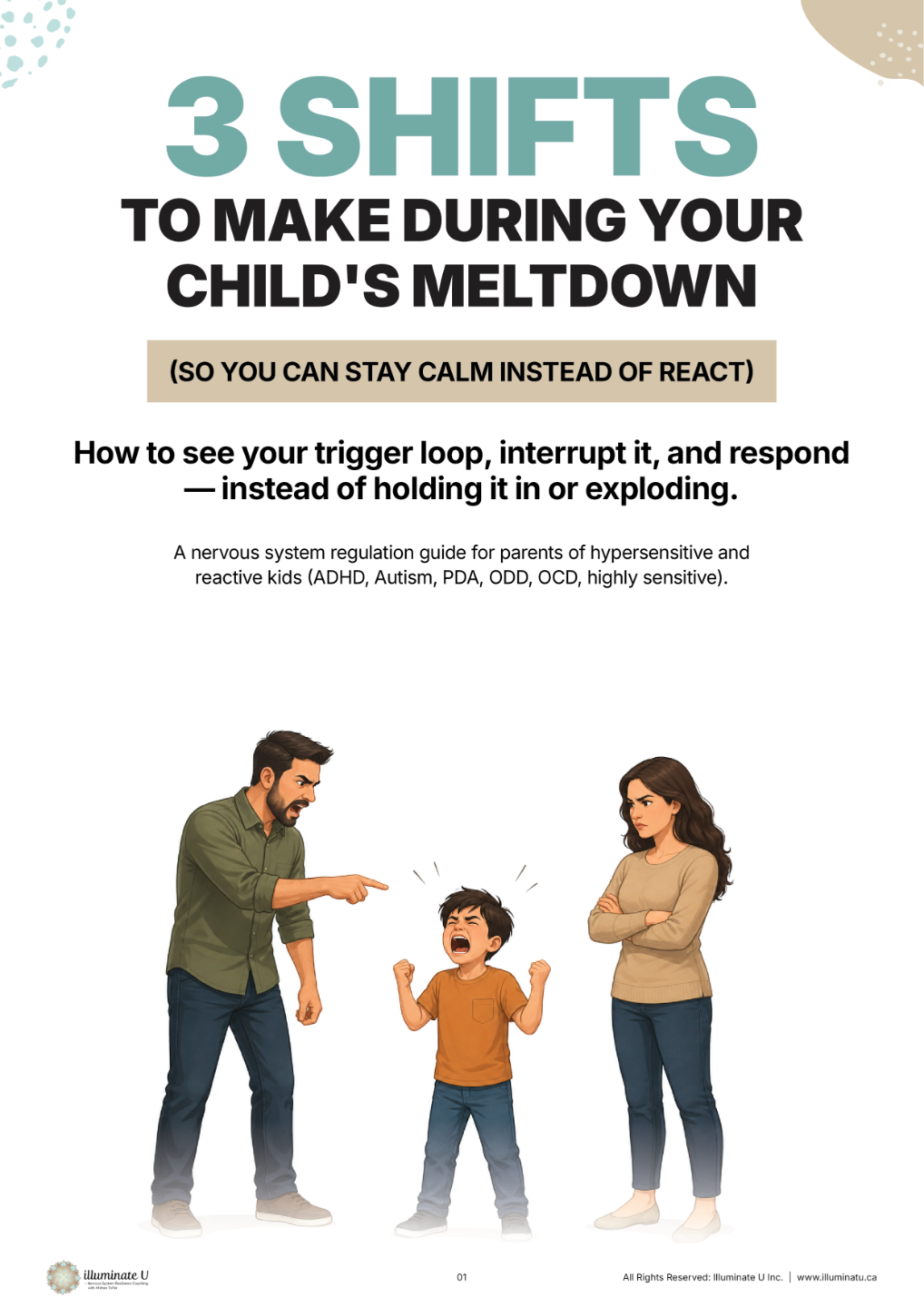
Free: The 3 Shifts Guide
The trigger loop and 3 patterns you get stuck in during meltdowns — and how to shift them so you can stay calm instead of react.
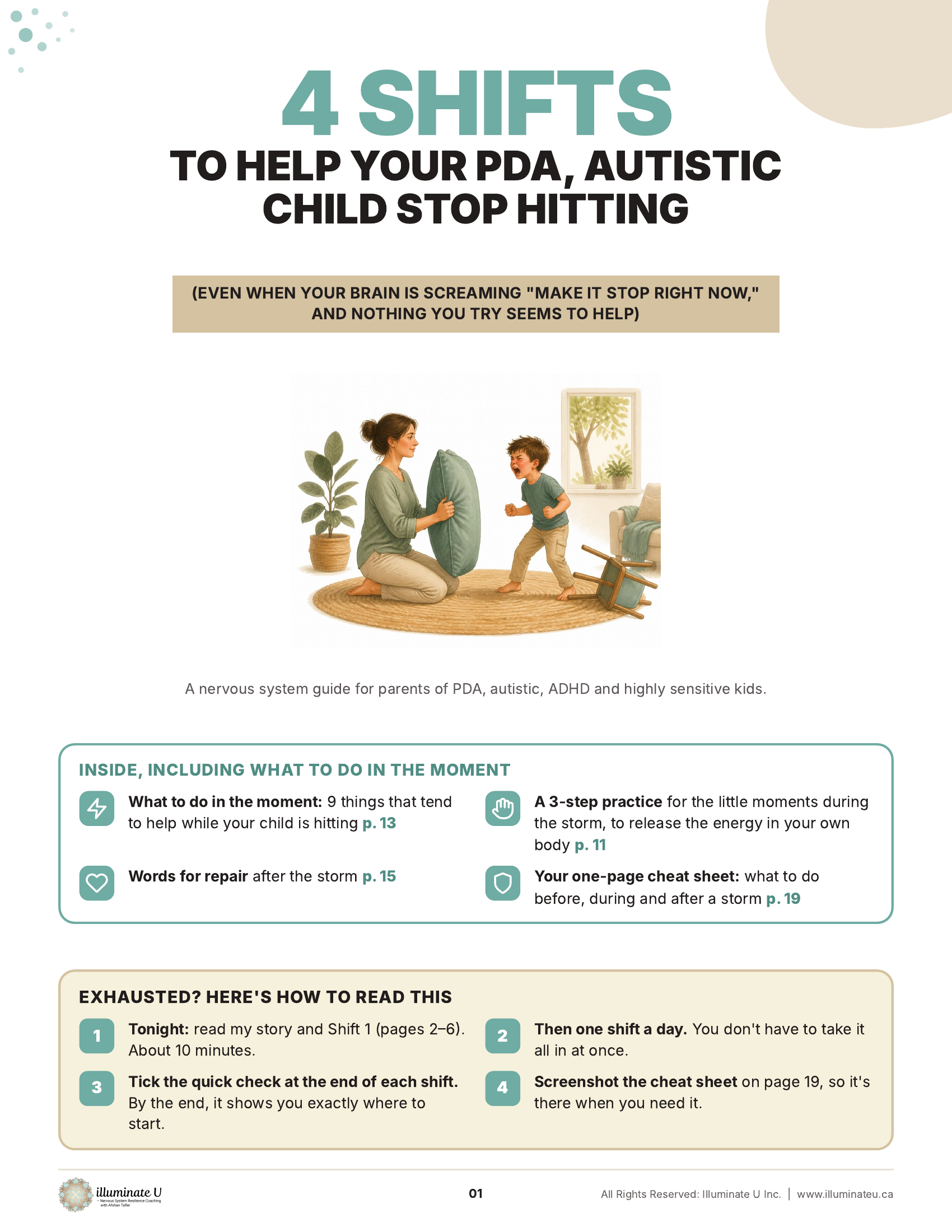
Free: 4 Shifts to Help Your PDA, Autistic Child Stop Hitting
What to do in the moment your child is hitting you, a one-page cheat sheet to keep on your phone, and the 4 shifts that changed things in our home.
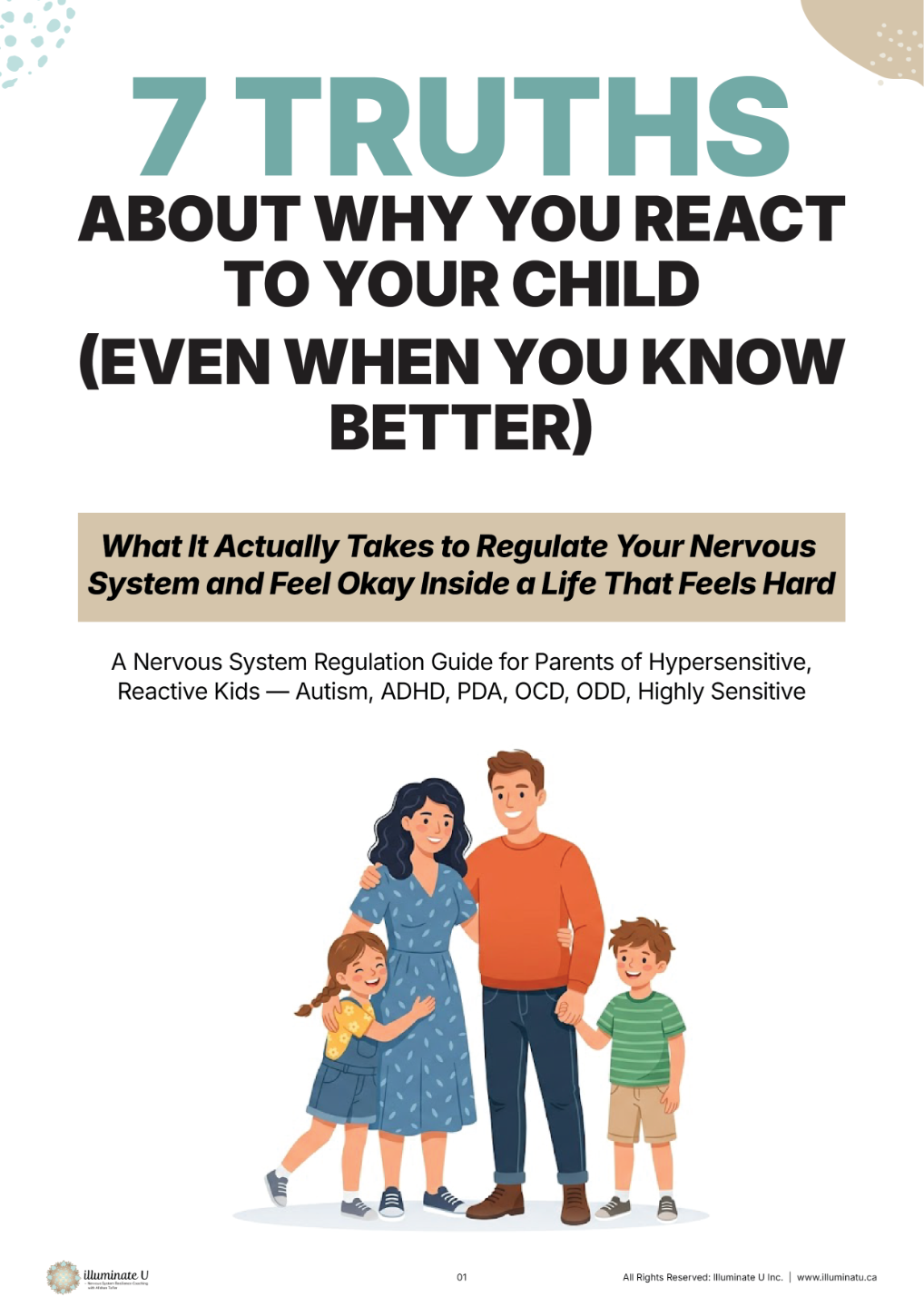
Free: 7 Truths About Why You React to Your Child Guide
Why you react even when you know better — the conditioning, nervous system states, hidden beliefs and patterns, and buried emotions running the show.
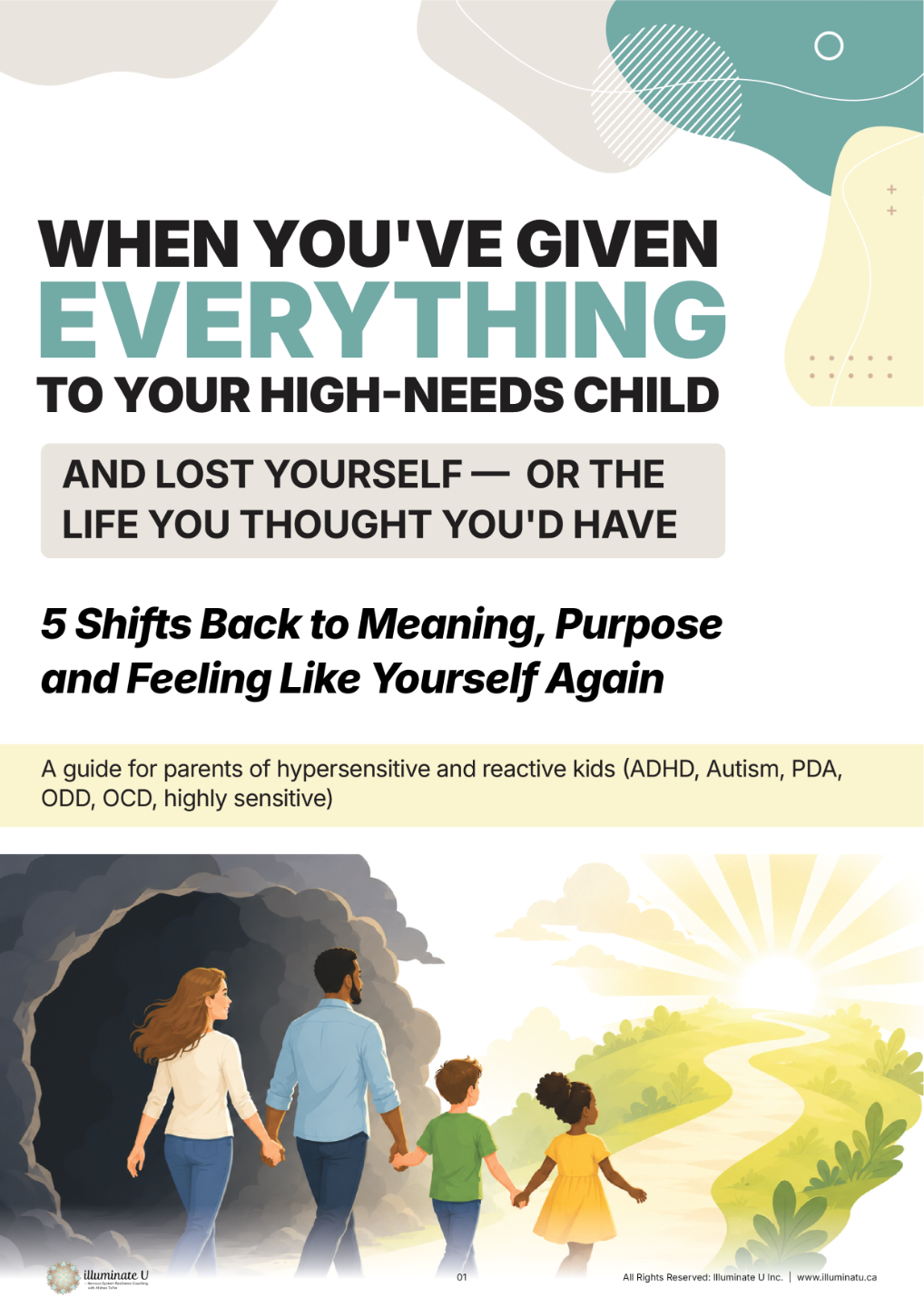
Free: 5 Shifts Back to Meaning Guide
For when you've given everything to your high-needs child and lost yourself — 5 shifts back to meaning, purpose and feeling like you again.
Free: The Regulated Parent Facebook Group
Ask your questions about the podcast and the free guides, and be with other parents who truly get it. Free and private.

