
How To Let Go Of Resenting Your Child

Thoughts like "I wish he were different" are quite normal, even though most of us dare not speak of them. Resentment is stuck anger, often protecting us from sadness, grief and not feeling good enough. I explain why we get stuck there, and four ways to release it so you can reconnect with your child.
Ever find yourself saying “I hate this kid! I wish he were different! She makes my life so much harder!” and perhaps even “I wish I never had this kid!”? Or maybe even a milder form of “I can’t believe she’s so ungrateful and disrespectful!”?
These are some of the thoughts that often go through our minds in the face of a child who is constantly triggering and challenging us. This is quite normal, by the way, even though most of us dare not speak of it.
But, have you ever found yourself stuck in this state of seething resentment and hatred towards your child, even after a triggering event has passed?
Why do we do this? As parents, we are wired to protect, care and love our kids. But, as humans, we are just that – HUMAN…People with our own reactive nervous system trying to protect us from letting loose the baggage of emotional hurts we hold inside.
To understand why we get stuck in resentment and how to let it go, we first need to understand what causes us to get angry in the first place.
You are wired to experience anger – it’s natural!
Believe it or not, you are wired to experience anger. Yup – it’s a natural part of being human. But due to social, cultural/societal and familial conditioning, many of us just don’t feel comfortable feeling anger because most of our learnings about anger is that it’s wrong and can hurt others (especially our kids); And, no one likes to be at the receiving end of anger either as it hurts and triggers us to fight back or retreat in fear.
The truth is that anger itself is not bad (it’s a biologically wired natural human emotion); But, the way in which we express it can be…Yelling, screaming, raging, shaming, hating, resenting, and getting physically aggressive are all unhealthy ways of expressing our anger.
But I can bet that 100% of you don’t purposefully engage in unhealthy anger reactions towards your kids, right? It’s almost like it’s this automatic wave that just takes over and blows you and your kids over in its wake.
Healthy anger, on the other hand, is felt, experienced, processed, expressed and some action is taken from it, but all in a calm yet assertive way. Anger bubbles up, you notice it’s there, you understand why it’s there, and you assert your response to get your need or expectations met or you take appropriate assertive action from it. That is the ideal expression of anger.
Why we express unhealthy anger
So, why do we get so triggered and launch into yelling, raging at, or resenting our kids?
The second truth is that anger is an automatic nervous system reaction that comes from our Autonomic Nervous System (ANS), which is not operating under the control of our conscious mind. It’s actually a physiological reaction and not a conscious pre-meditated one.
Your nervous system is constantly sensing for danger cues in your environment beneath the level of conscious awareness. It detects your child as a threat and sends a message up to your brain saying “Danger! Danger! Danger!” Your brain then makes a story: “this kid in front of me is a threat!” and your system gets flooded with stress chemicals causing your conscious thinking brain to go offline. In this nervous system state, you have two choices – Fight or Flee. Us parents who experience rage have nervous systems that automatically choose Fight. Yes, automatically. You didn’t choose it…this is just what your body is choosing to do, and your higher thinking brain is no longer online to make a better choice.
(To learn more about the nervous system states you can read this blog I wrote here.)
Your nervous system tendencies get shaped by your life experiences, especially the early life experiences with our caregivers. But the good news is you can reshape your nervous system and change those automatic reactions towards your kids!
When we get angry, the reality is it’s not because of what our kid is doing or saying, but because we have a nervous system that automatically launches into fight state because it senses what our kid is doing or saying as a threat. It’s an unconscious perception.
This is the frontline reason we go into fight state and react with unhealthy expressions of anger.
After the anger episode
Have you noticed that after you have yelled, screamed, raged, or shamed your kids and you have released all that angry energy, your body feels somewhat of a release and you can come back into your thinking brain?
At this point you either feel remorse or guilt and move actively into repair mode with your kids, or you feel a lot of shame and your system starts to numb out and shut down, or you may still be feeling that anger and sit in resentment, not able to let go of that hatred towards your child.
You may be secretly thinking, “this child is making me miserable” or even “this child is ruining my life.”
What are the resentful thoughts that come up for you?
Why we get stuck in resentment
Resentment just happens to be stuck anger.
“But wait – I just had a rage episode on my child – how can I be stuck in anger?” you may be asking right now.
Your body may have released that rage, but it is still stuck in a lower grade of the Fight state (which is known as the Sympathetic nervous system state).
Our nervous systems can get stuck in a state if it is still trying to protect us from a perceived threat. Hence, being stuck in resentment is actually an automatic protective strategy, but what is it protecting us from now?
Well, all unhealthy forms of anger, including resentment, may actually be protecting us from feeling the more vulnerable emotions that are being triggered underneath: feelings of sadness, disappointment, helplessness, hopelessness, powerlessness, unworthiness and shame that comes from not feeling good enough.
So, the key is to look at what is causing us to feel the underlying painful emotions that resentment and anger are trying to prevent us from feeling.
What’s beneath the protective strategy of ‘resentment’
What are some of the reasons we feel resentful in the first place?
Oftentimes, we may feel disappointed and sad that our kids are not “easier”, that life is so “hard” with them, that no matter what we do it feels like we have no control over them, we are exhausted and just need a break, we give so much of ourselves and don’t feel appreciated in return, and we have no time for ourselves.
In a nutshell, feeling resentment boils down to 3 reasons:
1. NEEDS: I’m exhausted and need a break, but don’t know how to meet my needs and practice self-care, (triggering underlying feelings of overwhelm, sadness, despair, powerlessness, lack of control).
2. ACCEPTANCE: This child is not what I expected/wanted and I’m having a hard time accepting this child as s/he is, (triggering underlying feelings of sadness, disappointment, grief, shame).
3. EXPECTATION OF LOVE & APPRECIATION: I do a lot for my child and in return I expect love, appreciation and respect, (and when this doesn’t happen it triggers underlying feelings of sadness, unworthiness, not good enough).
Going even deeper, what tends to underly and exacerbate points 1, 2 and 3 above are actually our childhood wounds that were created in situations where our needs didn’t matter, our parents could not accept us, and we learned that giving requires something in return. This is something to think about, but for the sake of this article, we will focus on the adult daily wounds we feel in the face of our kids that cause us to get stuck in resentment.
Why it’s not healthy to stay stuck in resentment
The challenge with being stuck in resentment is it’s like drinking poison and expecting the other person to die. It eats away at your insides, creating ongoing stress, causing you to disconnect from your child and doesn’t solve the problem of points 1, 2 and 3 above.
Resentment also feels like hate to your child. His or her nervous system is reading your nervous system, so even if you think you’re hiding it, they can see it all over your energy, body language and facial expressions and this just leads to one thing – the child believing you hate him and feeling shame for being so bad and unlovable.
Resentment, although an unconscious protective strategy, does not end up helping us or our child. It’s key to get unstuck from resentment so you can get back to the calm and connected state from where you can help yourself and your child.
How to release resentment so you can reconnect with your kid
Remember – resentment is stuck anger, and anger is a biologically wired emotion, with a lot of energy behind it. If that energy does not get released, it gets stuck and ends up as resentment.
To let go of resentment, we must approach it from both a body and mind perspective since we have a nervous system automatically reacting and getting stuck, and we have the underlying thoughts and emotions that are operating behind the scenes directing our nervous system reactions.
Here are ways to let go of that stuck resentment:
1. Practice releasing the stuck anger.
When you find yourself stuck in resentment towards your child, the first step is to help yourself release the pent-up stuck energy of anger in a safe and healthy way. Remember – anger wants to use that energy to take action and do something. Let that anger release by doing something actively to release it, while still keeping your conscious thinking brain online as a watcher. This is not just a cathartic release, but more about being with the anger, observing it, tolerating it and helping it to release in a safe way.
You can do this by first breathing deeply, with a longer, slower outbreath (which will help you stay somewhat regulated) and at the same time punch a cushion, hard pillow or wring a towel. Anger often wants to come out of our hands, so let it come out in this safe directed way.
You can also make a sound that sounds like “Voooooooooooo” for 2 minutes while thinking about what makes you angry. This “Vooooooooooo” sound is like a foghorn sound, more low pitched, that comes from deep in the gut (this practice was developed by Dr. Peter Levine, founder of Somatic Experiencing). Doing this for just two minutes can help to release the stuck anger too.
2. Practice self-care and meeting your needs.
Running yourself to the ground is a recipe for resentment. Over-giving and doing everything for everyone, without feeding yourself first is a strategy many of us have learned in life. But this strategy is not functional and doesn’t end up helping us. Learn to put yourself first. If this is hard, start with the smallest thing, like taking 5 minutes for yourself when you wake up before you tend to others’ needs. Acknowledge that 5 minutes of self-care for yourself. Throughout the day, allow yourself micro-moments of breaks and rest. Acknowledge those moments as your time. The more we acknowledge, the more our nervous system relaxes, and we feel less depleted.
If you feel cared for, you won’t resent your kids so much. But you need to give this care to yourself and learn a new way of being that is healthier for you and your whole family.
3. Let go of resistance and move into acceptance.
When we resist who our kids are and the life we have with them, we suffer. When we accept, we may not like it, but our body relaxes, our higher thinking brain comes back online, and it is only from this place that we can open up to choices and thinking of solutions.
When you find yourself resisting your child’s behaviors, stop, breathe, sit down, give yourself compassion for this moment of suffering. This helps you move out of the fight state (resistance) to the calm state of connection and clearer thinking, where you can accept what’s happening in front of you. From here, connect with your child, listen to them openly, and help your child problem solve.
Although we would love for our kids’ problems to go away, the reality is they are here, right in front of us, and accepting them helps us move into the zone of connecting and coming up with solutions.
4. Drop expectations and draw boundaries.
What?! Drop expectations?! Yes – I’m talking about dropping the expectation of your child showering you with love, accolades, appreciation and respect when you go above and beyond for them (or even for anything you do for them). If you choose to do something, do it without an expectation in return. Or learn to draw more boundaries and set limits so that you don’t feel like you’re being taken advantage of or unappreciated.
How much you do as a parent is ultimately your choice and how you feel about yourself is also something you can help yourself with and is not dependent on others’ feedback. When we depend on our kids to fill us up with love and appreciation, we will often find ourselves feeling empty. It also indirectly puts a lot of pressure on our kids. Give yourself that love and appreciation for being the parent you want to be, or, give less to your kids and feel good about that too.
Living an emotionally regulated life
The bottom line is none of us have been schooled in how to deal effectively with emotions, especially anger. This leads to many of us not being taught true emotional regulation (which is the practice of knowing how to be with and process emotions so we can feel better, have more connected relationships and have more resilience to handle life’s challenges).
Getting stuck in anger and resentment is a sign of not knowing how to regulate yourself in a healthy way; And, this is not your fault or anything to feel shameful about, as your nervous system got shaped this way due to your early life experiences. The good news is your automatic reactions can be reshaped!
Learning and practicing the tips above will help you to achieve better emotional regulation in life, allowing you to get unstuck from emotional states, and parent from a more conscious, calmer and connected state – which is what we all want as parents. As you learn this, you can then teach this to your kids too!
If you want to learn more about emotional regulation and changing stuck anger patterns, you can start with my free guides here.
Questions Parents Ask
Is it normal to resent my child?
Thoughts like "I wish he were different" or "She makes my life so much harder" often go through our minds in the face of a child who is constantly triggering and challenging us. This is quite normal, even though most of us dare not speak of it. As parents, we are wired to protect, care and love our kids. But as humans, we have our own reactive nervous system trying to protect us.
Why do I stay angry at my child after the moment has passed?
Resentment just happens to be stuck anger. Your body may have released the rage, but it is still stuck in a lower grade of the fight state, the sympathetic nervous system state. Resentment may actually be protecting you from feeling the more vulnerable emotions underneath, like sadness, disappointment, helplessness, powerlessness and the shame that comes from not feeling good enough.
What causes resentment toward my child?
In a nutshell, resentment boils down to 3 reasons. Needs: I'm exhausted and need a break, but don't know how to meet my needs. Acceptance: this child is not what I expected, and I'm having a hard time accepting them as they are. Expectation of love and appreciation: I do a lot for my child, and in return I expect love, appreciation and respect.
Can my child feel my resentment?
Resentment feels like hate to your child. Their nervous system is reading your nervous system, so even if you think you're hiding it, they can see it all over your energy, body language and facial expressions. This can lead to the child believing you hate them, and feeling shame for being so bad and unlovable.
How do I let go of resentment toward my child?
First, practise releasing the stuck anger safely: breathe with a longer, slower outbreath while punching a cushion or wringing a towel, or make a low "Voooo" sound for two minutes, a practice developed by Dr. Peter Levine. Then practise self-care and meeting your needs, let go of resistance and move into acceptance, and drop expectations or draw boundaries so you don't feel taken advantage of.
Changing the Pattern of Being Hard on Yourself (and Your Kids)
how self-criticism turns into blame
Breaking the Anger and Rage Cycle in PDA & Autistic Parenting
why rage builds and how to shift it
The Key to Handling Your Child's Big Emotions: Learn to Feel Your Own
feeling the emotions underneath your anger
The Loss No One Talks About in Parenting a High Needs Child
the grief behind wishing things were different
I have four free guides for parents of PDA, autistic and high-needs kids: the 3 Shifts guide for meltdowns, the 4 Shifts Hitting guide for when your child hits, the 7 Truths guide on why you react even when you know better, and the Meaning guide for finding your way back to yourself. Pick whichever one fits where you are right now.
Click Here to Get the Free Guides
And if a question comes up while you’re listening, or while you’re reading one of the guides, come ask it in The Regulated Parent Facebook group. It’s a free, private place to share, ask, and be with parents who truly get it.
And if you want to go deeper with me, the Regulation Rebuild is my course for parents who want to rebuild their own nervous system capacity, step by step. Join the waitlist to hear first when the next round opens.
About the author: Afshan Tafler is a Nervous System Resilience Coach, host of The Regulated Parent podcast, and a parent raising a PDA autistic teen with high anxiety and OCD. She is trained in Internal Family Systems (Level 3), Havening, polyvagal-informed practice and EFT, and is completing her Somatic Experiencing training. She has guided hundreds of parents of ADHD, autistic and PDA kids from burnout and barely coping to steadier, more connected and more alive, within the life they are actually living.
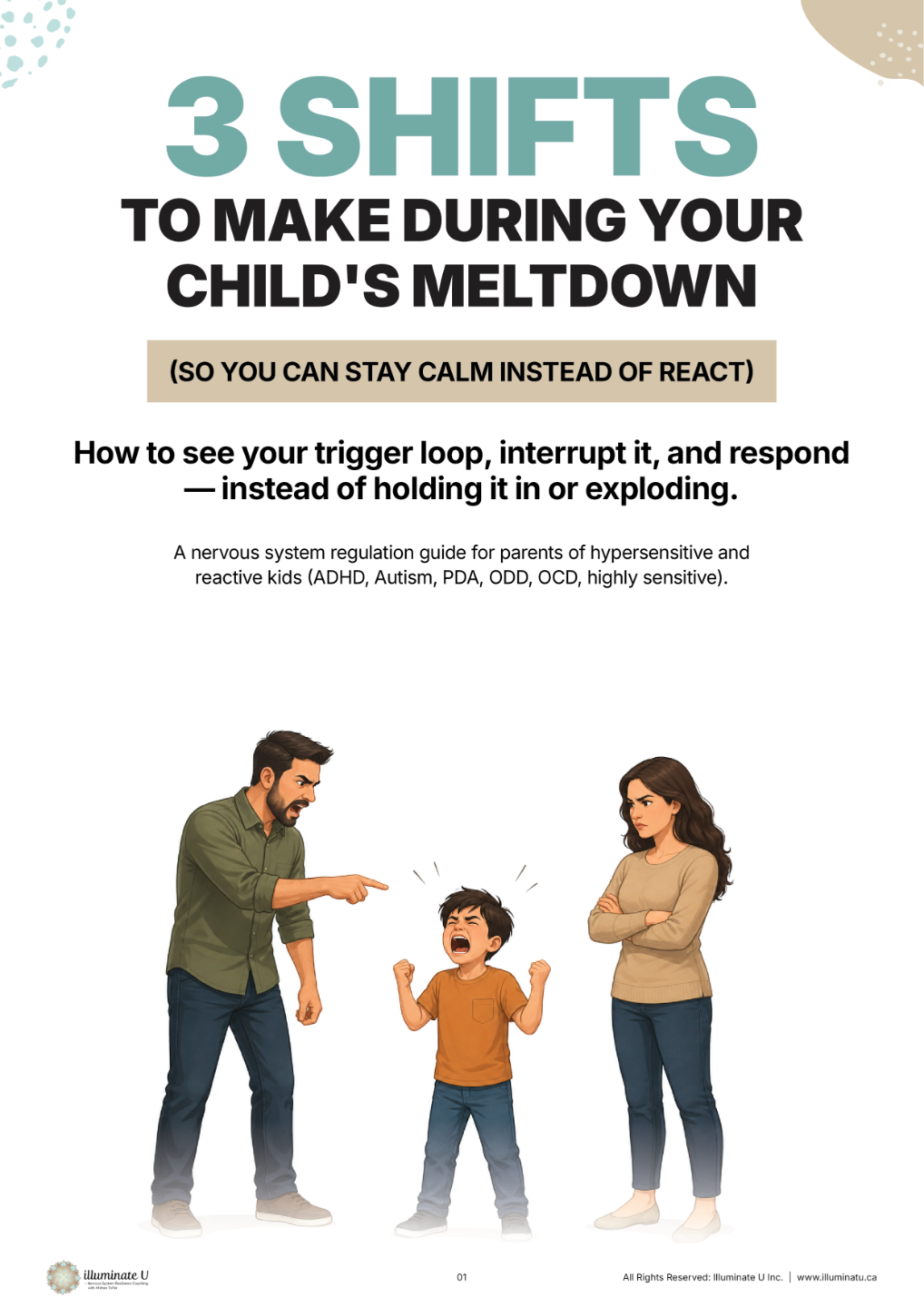
Free: The 3 Shifts Guide
The trigger loop and 3 patterns you get stuck in during meltdowns — and how to shift them so you can stay calm instead of react.
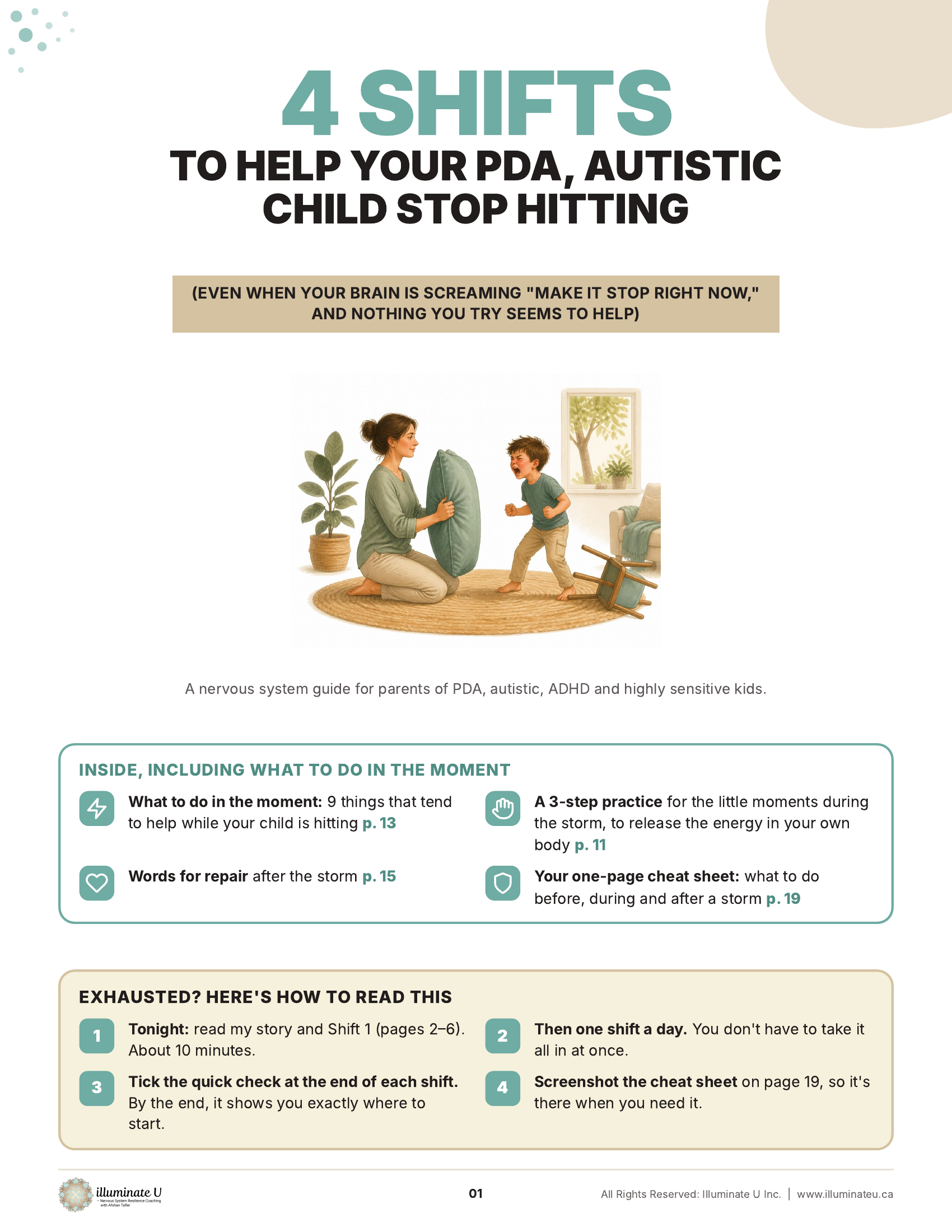
Free: 4 Shifts to Help Your PDA, Autistic Child Stop Hitting
What to do in the moment your child is hitting you, a one-page cheat sheet to keep on your phone, and the 4 shifts that changed things in our home.
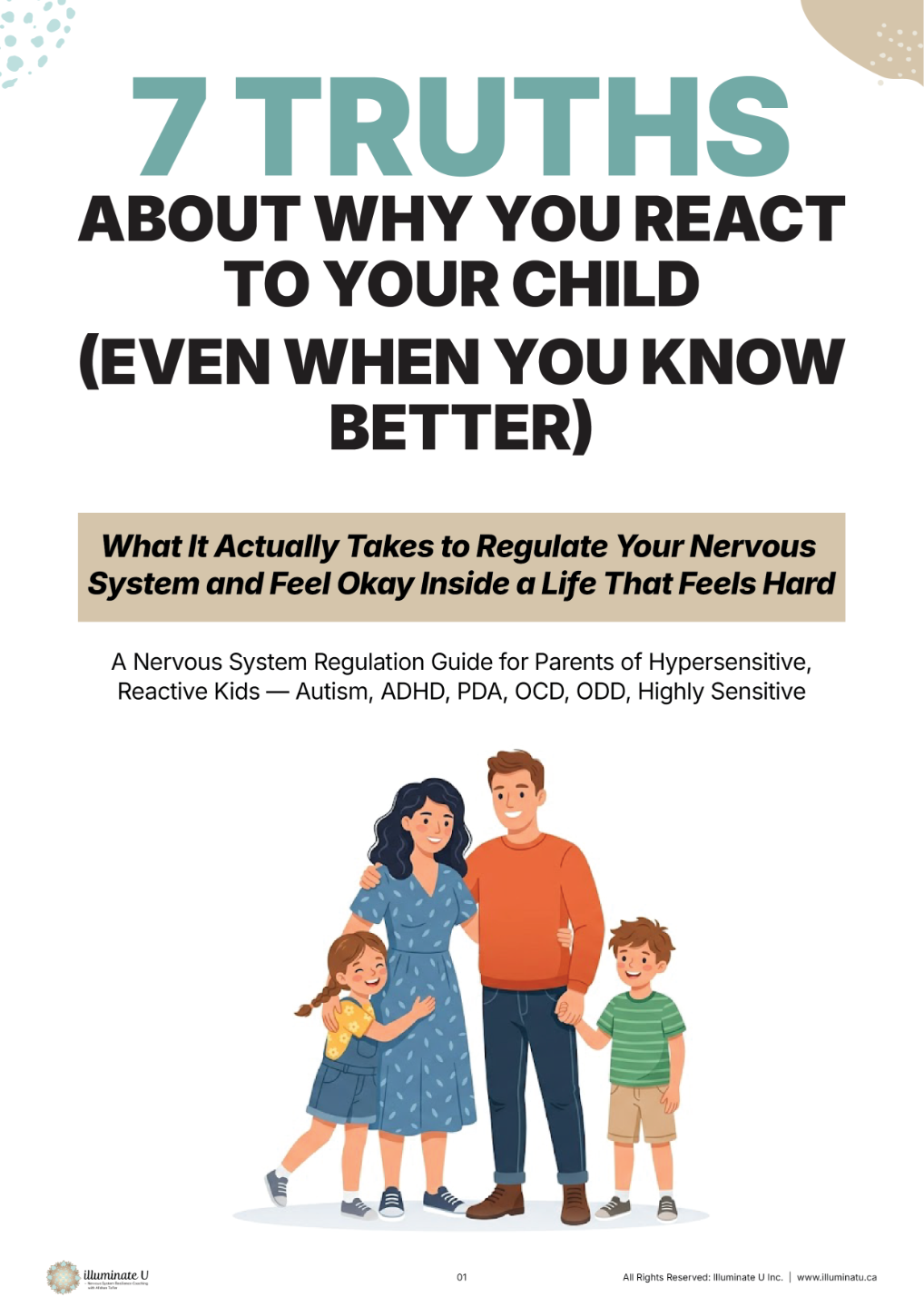
Free: 7 Truths About Why You React to Your Child Guide
Why you react even when you know better — the conditioning, nervous system states, hidden beliefs and patterns, and buried emotions running the show.
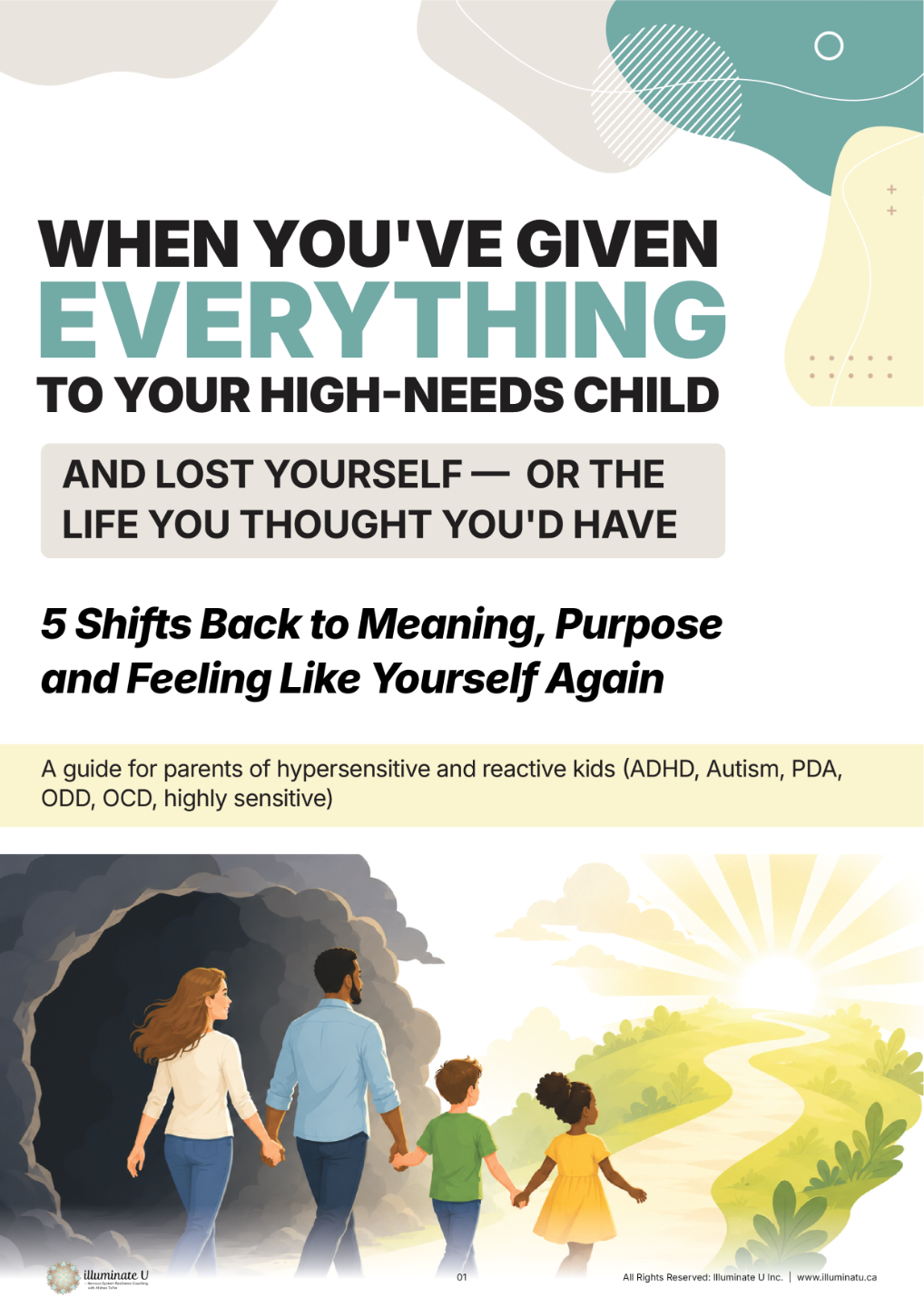
Free: 5 Shifts Back to Meaning Guide
For when you've given everything to your high-needs child and lost yourself — 5 shifts back to meaning, purpose and feeling like you again.
Free: The Regulated Parent Facebook Group
Ask your questions about the podcast and the free guides, and be with other parents who truly get it. Free and private.

