
What to do when overwhelmed

Have you ever felt so overwhelmed by the challenges of life?
You’ve got deadlines at work, you’re feeling exhausted, your kids are having meltdowns, and you feel like you’ve got a handle on things, but then something big happens or you get some bad news, and you feel like you’re spiralling out of control.
The main reason why overwhelm hits is because of a feeling state of: I can’t handle this challenge…it’s too big for me…and I don’t know what to do.
Underneath this is a flooding of many emotions threatening to overtake you, which may include: frustration, anger, fear, sadness, grief, disgust, helplessness, powerlessness, unworthiness, shame, not enough.
You may cycle through trying to meet the challenges, fighting hard to take control, to anxiety and fear of the challenge and your ability to handle it, to then dropping into despair and a feeling of hopelessness when you’re feeling like nothing you do is working.
I know this state all too well.
Having a child with anger challenges, defiance, anxiety, and other special needs, when I try to do everything possible to help him or the situation, and it doesn’t work, then I can go into overwhelm, which then sends me spiralling into the nervous system state of freeze, disconnection and feeling like giving up.
In the video below I talk about my recent experience with serious overwhelm. In fact, I sat in it for 4 days before I could fully get through it.
With 3 major things happening, all at once, I felt significantly challenged, especially since one of these things caused my son to feel quite hurt and has affected our whole family...
...so I was triggered, triggered, triggered!
I cycled through anger, fear, hopelessness and despair. All emotions, when put together, are a recipe for overwhelm.
If you are feeling overwhelmed or tend to get overwhelmed a lot, then I encourage you to watch the video below.
In this short video (13 minutes) I help you understand:
✅ Why we get overwhelmed
✅ The parts of us that get triggered
✅ The many emotions taking us over when overwhelm hits
✅ What happens with your nervous system that sends you into numb, shut down, despair
✅ How to help your overwhelm so you can feel like you can handle the challenges life presents
And ***vulnerability alert*** — I cry in this video. Because I was still in the thick of it, processing it all, and I am human.
Overwhelm hits when we feel "I can't handle this challenge, it's too big for me, and I don't know what to do." After sitting in serious overwhelm for four days, I share why we get overwhelmed, what happens in the nervous system, and practical tips to be with your emotions before taking action.
Here are some tips on how to help your overwhelm:
- When overwhelm hits, take all non-essential to-do items off your list. It’s time for self-care.
- Identify all the emotions you are feeling. Eg. I am angry, sad, in fear, anxious, etc.
- Go inside, get quiet, and notice the thoughts and beliefs coming up. Are there thoughts like: What am I going to do? How am I going to handle this? What will happen? Or are there self-negative thoughts like: Why did I do this? I am so stupid/an idiot. I can’t handle anything. I am a failure.
- Don’t take action yet - we often have a part of us trying to reason with all the overwhelm, telling us that things will be ok and it’s not that big a deal, but your nervous system is saying it is, so at this point we need to first be with all that is here, and help it.
- Journal write from all of these emotions and thoughts. Notice what beliefs are coming up. Notice the parts of you that are in fear and don’t think they can handle this situation. Where did you learn these beliefs?
- Bring loving kindness and compassion to your emotions and thoughts. Be with them, treat them like they are parts of you, and tell them you understand, this is hard, and it’s ok, you are human.
- Once you feel some relief, and you can think clearly, then help yourself to shift the beliefs about yourself and your ability to handle this challenge.
- Final tip #1 - if you find your system dropping into hopeless/despair and wanting to give up, this is the Dorsal Vagal shut-down nervous system state. Help it to rise back up by bringing gentle energy to your system, by taking a relaxing walk, or doing some yoga or qi-gong to help bring you out of shut down. This tells your body you can handle the challenge, and brings more energy to your system.
- Final tip #2 - if you come out of shut-down and feel angry or fearful, help yourself release that energy. It’s emotional energy that needs to move and release. Allow yourself to accept it, and find a healthy way to release it. Either vent or cry to a loved one who can hold space without judgement or advice, or do something more physical like exercise to release the angry energy.
Questions Parents Ask
Why do I get so overwhelmed as a parent?
The main reason overwhelm hits is a feeling state of: I can't handle this challenge, it's too big for me, and I don't know what to do. Underneath is a flood of emotions threatening to overtake you, which may include frustration, anger, fear, sadness, grief, helplessness, shame and not enough.
What should I do first when I feel overwhelmed?
Take all non-essential to-do items off your list. It's time for self-care. Identify all the emotions you are feeling, then go inside, get quiet, and notice the thoughts and beliefs coming up. Don't take action yet. Your nervous system is saying this is a big deal, so first be with all that is here, and help it.
How do I come out of shutdown and hopelessness when overwhelmed?
If you find your system dropping into hopelessness and wanting to give up, this is the dorsal vagal shutdown state. Help it rise back up by bringing gentle energy to your system, like a relaxing walk, yoga or qi-gong. If you then feel angry or fearful, find a healthy way to release that energy, by venting or crying to a loved one who can hold space, or through exercise.
A Mind, Body and Soul Approach to Decreasing Stress in Times of Crisis
calming stress when life feels like crisis
Why You Feel Depressed When Parenting a Hypersensitive, High-Needs Child
when overwhelm turns into shutdown and depression
The To-Do List Trap: Why Productivity Keeps Parents of High-Needs Kids Dysregulated
why doing more keeps you dysregulated
The Key to Handling Your Child's Big Emotions: Learn to Feel Your Own
learning to be with your own emotions
I have four free guides for parents of PDA, autistic and high-needs kids: the 3 Shifts guide for meltdowns, the 4 Shifts Hitting guide for when your child hits, the 7 Truths guide on why you react even when you know better, and the Meaning guide for finding your way back to yourself. Pick whichever one fits where you are right now.
Click Here to Get the Free Guides
And if a question comes up while you’re listening, or while you’re reading one of the guides, come ask it in The Regulated Parent Facebook group. It’s a free, private place to share, ask, and be with parents who truly get it.
And if you want to go deeper with me, the Regulation Rebuild is my course for parents who want to rebuild their own nervous system capacity, step by step. Join the waitlist to hear first when the next round opens.
About the author: Afshan Tafler is a Nervous System Resilience Coach, host of The Regulated Parent podcast, and a parent raising a PDA autistic teen with high anxiety and OCD. She is trained in Internal Family Systems (Level 3), Havening, polyvagal-informed practice and EFT, and is completing her Somatic Experiencing training. She has guided hundreds of parents of ADHD, autistic and PDA kids from burnout and barely coping to steadier, more connected and more alive, within the life they are actually living.
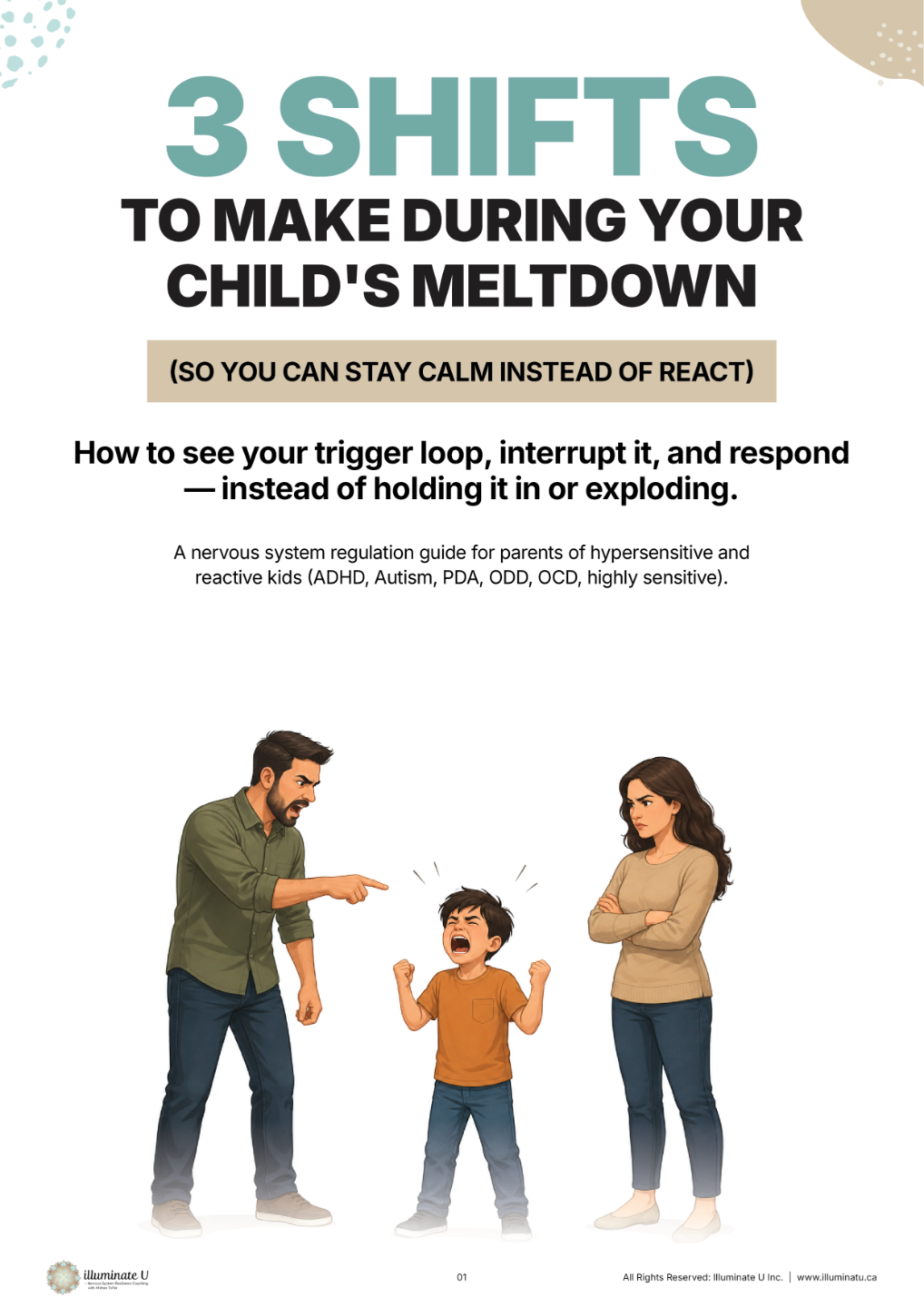
Free: The 3 Shifts Guide
The trigger loop and 3 patterns you get stuck in during meltdowns — and how to shift them so you can stay calm instead of react.
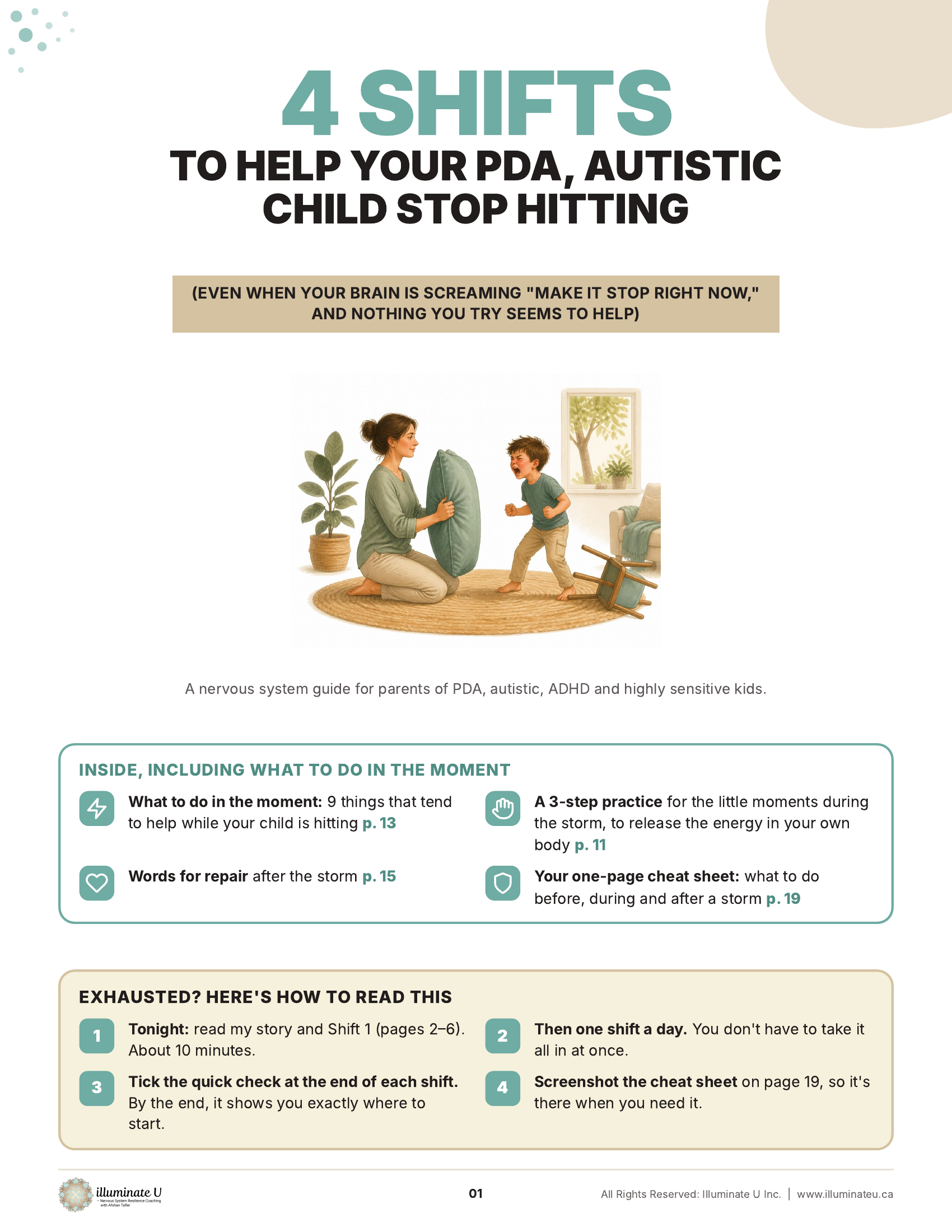
Free: 4 Shifts to Help Your PDA, Autistic Child Stop Hitting
What to do in the moment your child is hitting you, a one-page cheat sheet to keep on your phone, and the 4 shifts that changed things in our home.
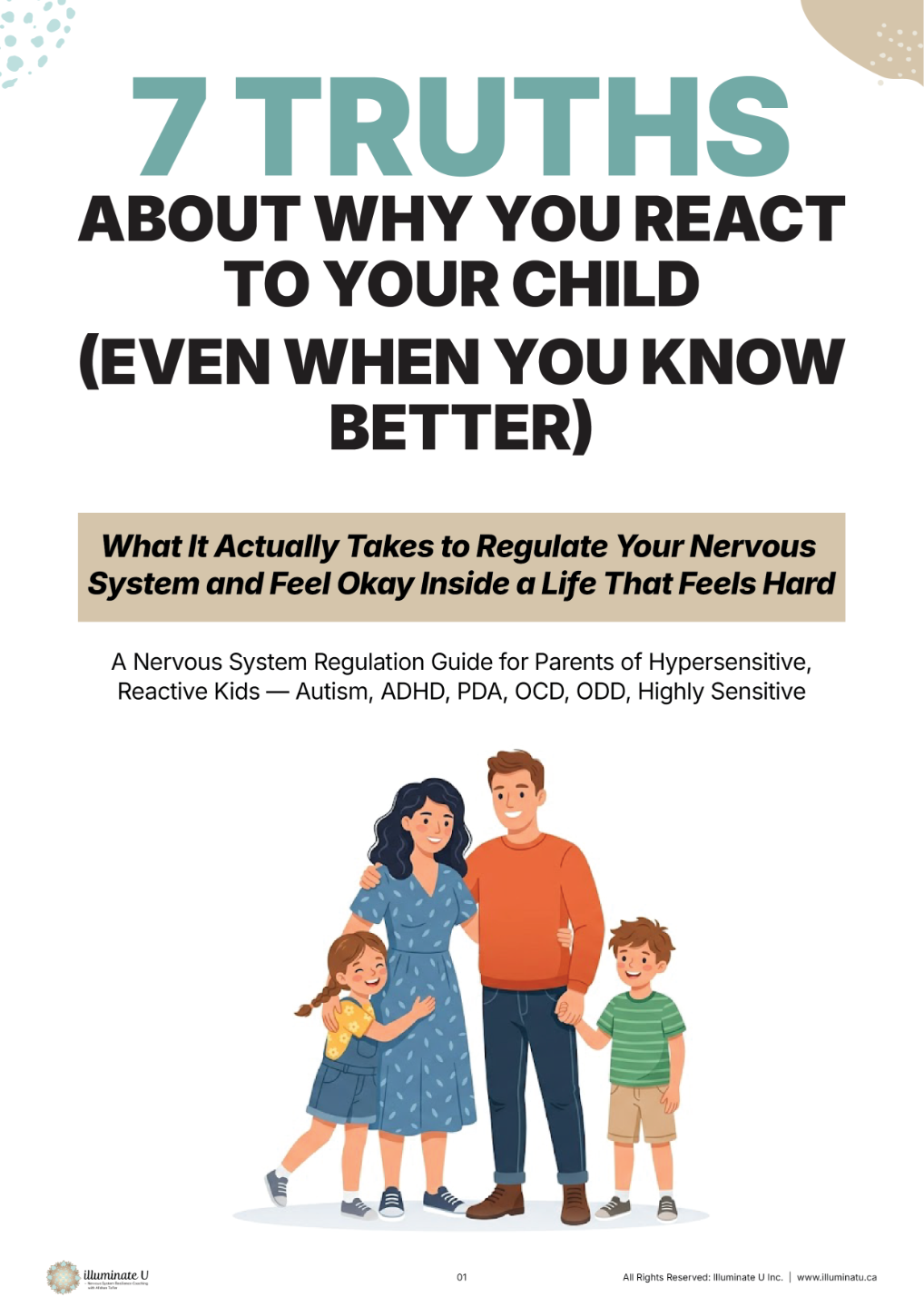
Free: 7 Truths About Why You React to Your Child Guide
Why you react even when you know better — the conditioning, nervous system states, hidden beliefs and patterns, and buried emotions running the show.
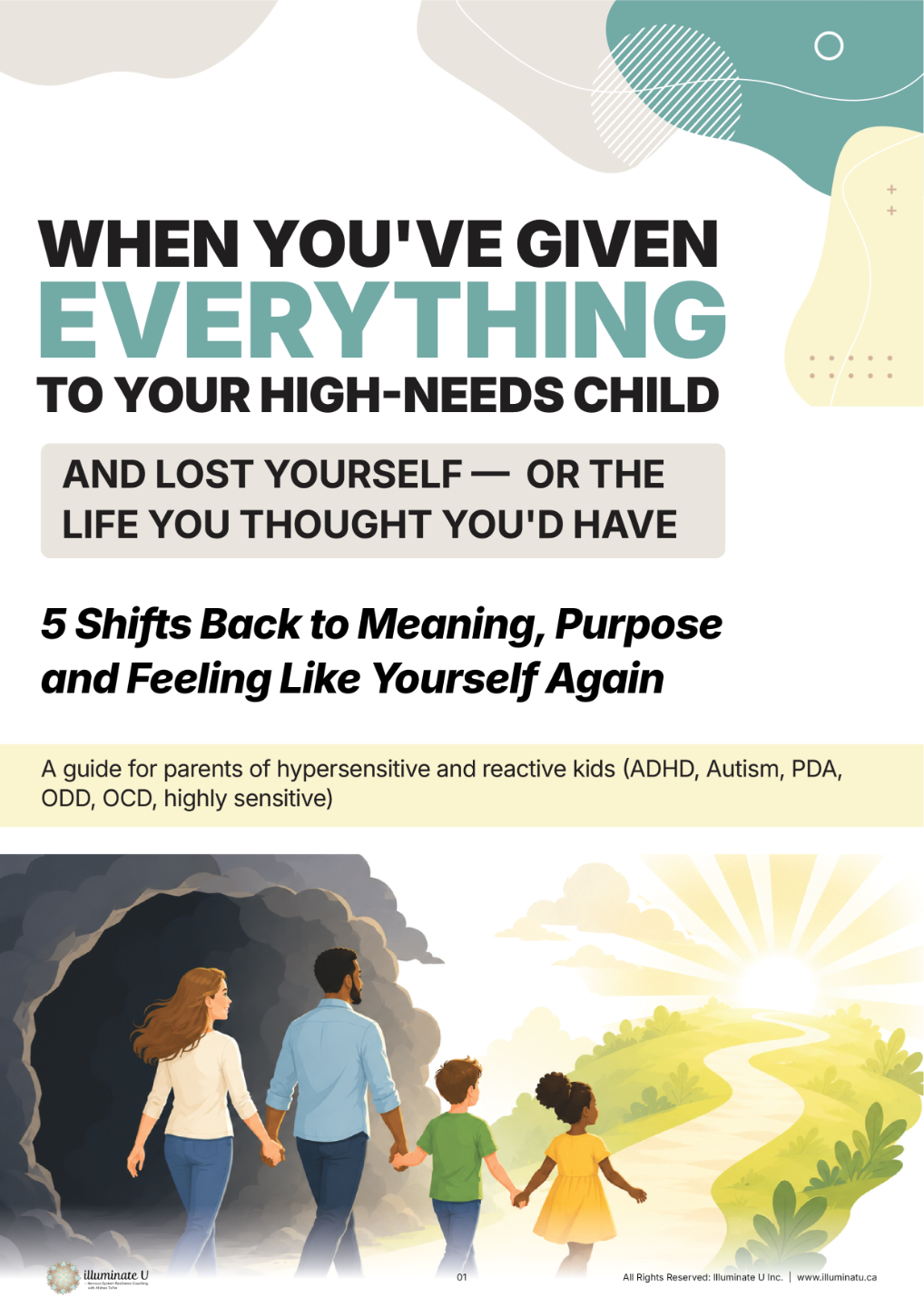
Free: 5 Shifts Back to Meaning Guide
For when you've given everything to your high-needs child and lost yourself — 5 shifts back to meaning, purpose and feeling like you again.

Free: The Regulated Parent Facebook Group
Ask your questions about the podcast and the free guides, and be with other parents who truly get it. Free and private.

