
What Your Nervous System Needs When Your Child Is Triggering You
When my son swore at me during meltdowns, I would yell back or threaten consequences, and I felt like I was failing. This post explains the three things your nervous system needs to feel safe when your high-needs child is triggering you, context, choice and connection, and how to give them to yourself first.
You can also listen to this in audio format only on The Regulated Parent Podcast on Apple or Spotify. Look for Episode #7
Below is the podcast turned into a blog article for easy reading.
What Your Nervous System Needs When Your Child Is Triggering You
You try to stay calm.
Your child is swearing, maybe even breaking things or hurting a sibling, and your whole body is mobilized with energy. You know you should stay grounded — but the panic takes over. You yell. You snap. You say or do something that only seems to make it worse.
And afterward, you’re left spiraling. You feel like you’ve failed. Again. You wonder why nothing works. Why you don’t know how to handle your own child.
If you’ve been there, I get it. I’ve been there too. And what I’ve learned — through experience, education, and so many dysregulated moments — is that your nervous system isn’t failing you. It just needs support. It needs safety. It needs 3 core things to come back into balance:
Context. Choice. Connection.
Let me walk you through what these mean and how they can help you — not just in theory, but in the actual storm of parenting a hypersensitive, high-needs child.

A Moment from My Life: When My Child Swore at Me
There was a time when my child would swear at me during meltdowns. “I hate you,” “You’re an idiot,” “F-you.”
In those moments, my chest would tighten. My jaw would clench. My heart would pound. I would feel a rush of energy surge through me — the overwhelming urge to do something to stop the behavior. I would try to stay calm… only to be taken over by my own reaction, yelling back or threatening consequences.
At the time, I truly believed I had no choice. I was in survival mode. I didn’t know another way to feel safe.
But none of it worked. Trying to control the situation only escalated his behavior and left me feeling ashamed, resentful, and like I was failing as a mother.
What the Nervous System Needs to Feel Safe
Later, I learned something that changed everything: the nervous system needs three things to feel safe.
1. Context
2. Choice
3. Connection
These are the anchors that bring your body out of fight, flight, freeze — and into regulation and presence. When you can give these three things to yourself, everything begins to shift. Only then can you offer them to your child.
Let’s walk through each one.
1. Context: “I Know What’s Happening Here”
Let’s go back to that moment — your child is swearing at you. Maybe yelling, “I hate you!” or “You’re the worst parent ever!”
Your nervous system reacts fast: panic, anger, shame. Thoughts rush in: “This is unacceptable,” “My child shouldn’t talk to me this way.”
That reaction is normal. But what your system needs in that moment is context.
Context brings in the who, what, when, where, why, and how. It reminds your brain:
- “This is a PDA meltdown.”
- “This is a stress response, not a personal attack.”
- “I know what’s happening.”
- “I know what to do.”
When I can say to myself: “Oh yes, this is expected. It makes sense. I’m going to stay quiet for now because that’s what helps him ride the wave” — my nervous system calms. It feels less like threat, more like a challenge I know how to meet.
Context brings clarity. It helps you not take things personally. It gives your brain a map.
2. Choice: “I’m Choosing on Purpose”
When you’re in the middle of an intense moment, it often feels like you have no choice.
You feel frozen, or you default to yelling — because your survival system says “do something!”
But what I’ve learned is this: your nervous system doesn’t need perfect choices. It needs to feel like it has a choice at all.
And choice doesn’t mean controlling your child. It means asking:
- What’s the most supportive choice I can make — even if it doesn’t fix everything?
Some examples:
- “I choose to stay quiet and not escalate.”
- “I choose to remove a sibling for safety — even if it heightens my child’s stress.”
- “I choose to help myself first — because I can’t co-regulate if I’m dysregulated.”
Sometimes your only options are crappy and crappier. But naming your choice makes all the difference.
Because when we feel trapped, we spiral into powerlessness and despair. But when we feel choice — even in a hard moment — we stay in our agency.
3. Connection: “I’m Still With You — and With Myself”
Most of us try to connect with our child first. But if we’re highly activated inside, we’re trying to connect from a place of fear — and our child will feel it.
Real connection starts with yourself.
It means turning inward and acknowledging what’s happening inside of you — fear, anger, shame, helplessness — and staying with it instead of fighting it.
You can try this:
- Place your hand on your chest or belly
- Breathe
- Say to yourself: “I see you. This makes sense. You’re not alone.”
This brings your ventral vagal system online — the system of regulation, connection, and presence.
From here, you might still say nothing to your child. You might avoid eye contact or give them space. But if you stay open-hearted, they will feel that.
Sometimes, I imagine sending love from my heart to his — without words.
That is energetic connection. That is co-regulation — even if it’s quiet.
What Changed for Me
Once I started bringing context, choice, and connection to myself, everything shifted.
I didn’t need to yell. I didn’t collapse. I didn’t have to fix everything.
I felt steadier. More creative. More like the mother I wanted to be — even when things were still hard.
And I could offer the same to my son. I could build in context, offer choices, and stay connected — even in the storm.
Your Practice: How to Begin
Try journaling or reflecting on these three questions:
Context: How can you remind yourself that your child’s behavior is expected and makes sense — even when it’s hard? What helps you remember that you know what to do?
Choice: What options can you give yourself in those moments — even if they’re not perfect? Can you feel like you’re choosing on purpose?
Connection: How can you stay with yourself — the scared or angry part — and offer it care? Can you feel connection even if you say nothing at all to your child?
You might even visualize a hard moment from the past:
- Picture yourself bringing in context, choice, and connection.
- Let your nervous system practice this new response.
Because the more familiar it becomes, the more accessible it will be next time.
You’re Not Alone
If this spoke to you, send me a message. Share it with someone else who’s in the thick of it. Let them know they’re not alone.
Because even in the storm, you can return to yourself. That’s where the healing begins.
Questions Parents Ask
Why do I yell when my child swears at me during a meltdown?
Your nervous system reacts fast: panic, anger, shame. You feel a rush of energy and the overwhelming urge to do something to stop the behaviour. In those moments it can feel like you have no choice, because you're in survival mode. Your nervous system isn't failing you. It just needs support. It needs safety.
What does my nervous system need when my child is triggering me?
It needs three core things to come back into balance: context, choice and connection. These are the anchors that bring your body out of fight, flight, freeze and into regulation and presence. When you can give these three things to yourself, everything begins to shift. Only then can you offer them to your child.
How do I stop taking my child's meltdowns personally?
Bring in context. Remind your brain: This is a PDA meltdown. This is a stress response, not a personal attack. I know what's happening. I know what to do. Context brings clarity. It helps you not take things personally, and it gives your brain a map, so the moment feels less like threat and more like a challenge you know how to meet.
How can I stay connected to my child when I'm triggered?
Real connection starts with yourself. Turn inward, acknowledge the fear, anger, shame or helplessness, and stay with it instead of fighting it. Place your hand on your chest or belly, breathe, and say: I see you. This makes sense. You're not alone. You might still say nothing to your child, but if you stay open-hearted, they will feel that.
When Your Child Swears or Says Mean Things And It Stings
why hurtful words hit so hard
Why It Feels So Hard to Stay Calm When Your PDA Child Is Melting Down
what happens in you during meltdowns
How to Pause Instead of React to Your High-Needs Child: The #1 Skill You Need
building the pause before you react
Why Trying to Think Differently of Your Child Doesn't Work in Heated Moments
what works better than reframing when triggered
I have four free guides for parents of PDA, autistic and high-needs kids: the 3 Shifts guide for meltdowns, the 4 Shifts Hitting guide for when your child hits, the 7 Truths guide on why you react even when you know better, and the Meaning guide for finding your way back to yourself. Pick whichever one fits where you are right now.
Click Here to Get the Free Guides
And if a question comes up while you’re listening, or while you’re reading one of the guides, come ask it in The Regulated Parent Facebook group. It’s a free, private place to share, ask, and be with parents who truly get it.
And if you want to go deeper with me, the Regulation Rebuild is my course for parents who want to rebuild their own nervous system capacity, step by step. Join the waitlist to hear first when the next round opens.
About the author: Afshan Tafler is a Nervous System Resilience Coach, host of The Regulated Parent podcast, and a parent raising a PDA autistic teen with high anxiety and OCD. She is trained in Internal Family Systems (Level 3), Havening, polyvagal-informed practice and EFT, and is completing her Somatic Experiencing training. She has guided hundreds of parents of ADHD, autistic and PDA kids from burnout and barely coping to steadier, more connected and more alive, within the life they are actually living.
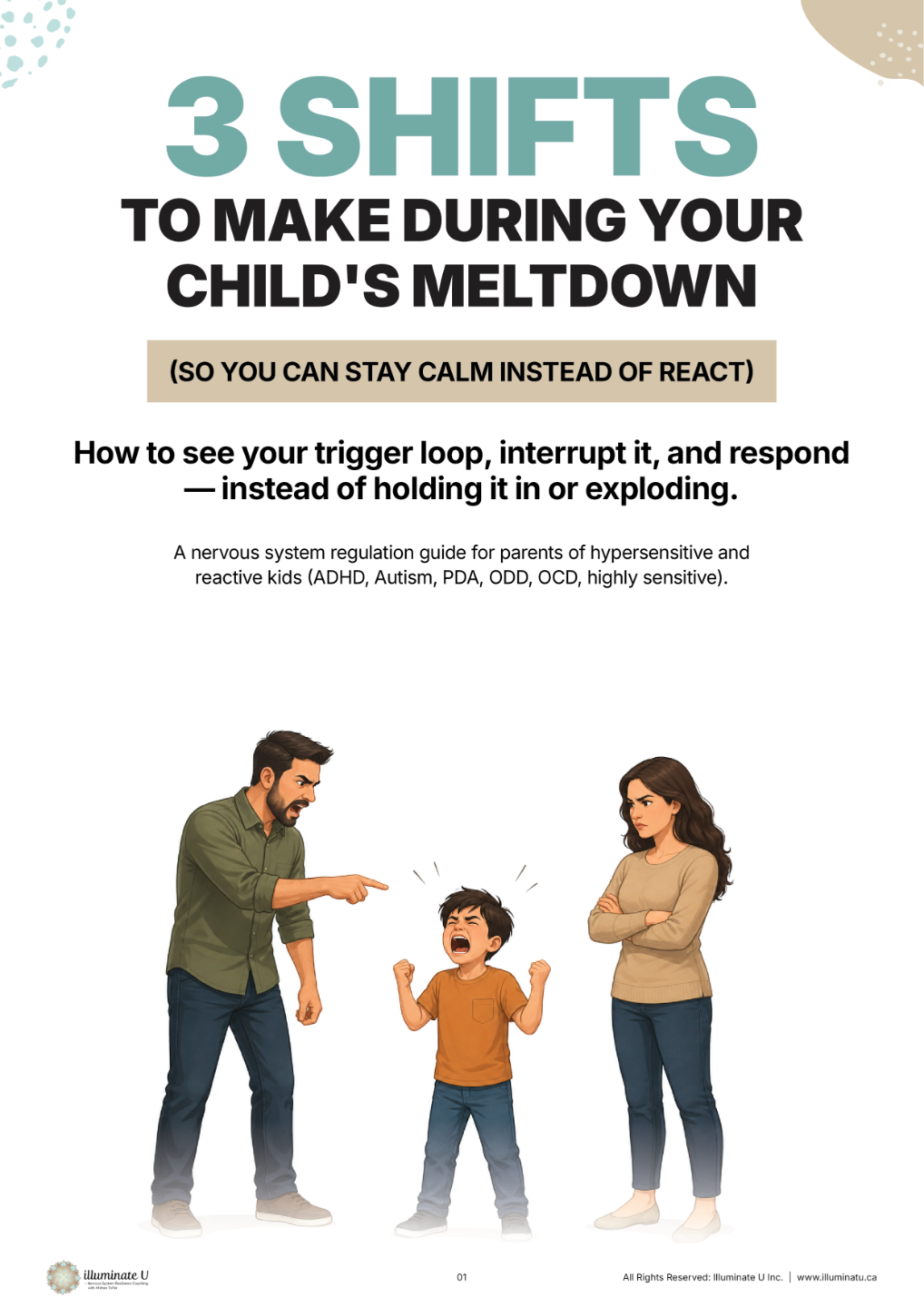
Free: The 3 Shifts Guide
The trigger loop and 3 patterns you get stuck in during meltdowns — and how to shift them so you can stay calm instead of react.
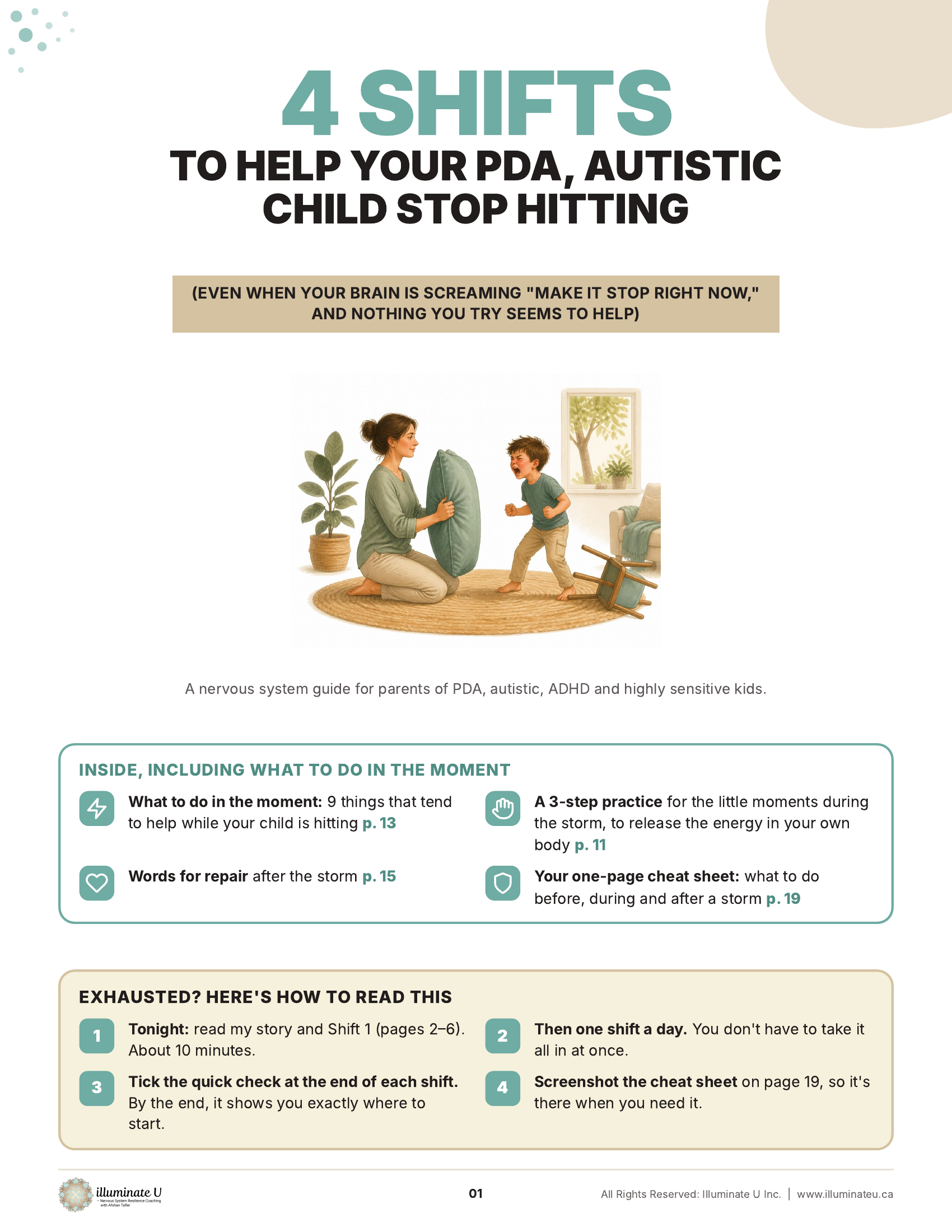
Free: 4 Shifts to Help Your PDA, Autistic Child Stop Hitting
What to do in the moment your child is hitting you, a one-page cheat sheet to keep on your phone, and the 4 shifts that changed things in our home.
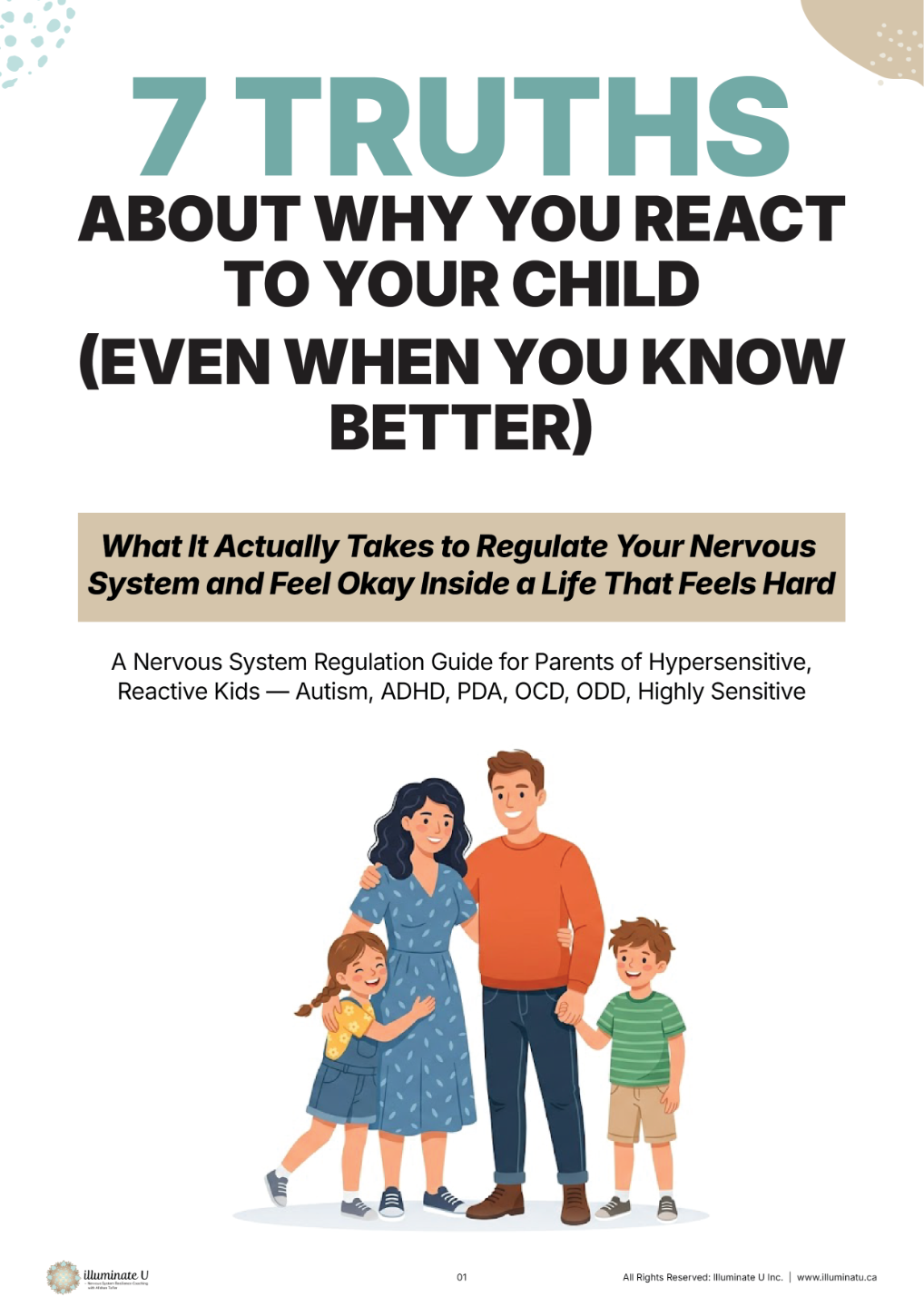
Free: 7 Truths About Why You React to Your Child Guide
Why you react even when you know better — the conditioning, nervous system states, hidden beliefs and patterns, and buried emotions running the show.
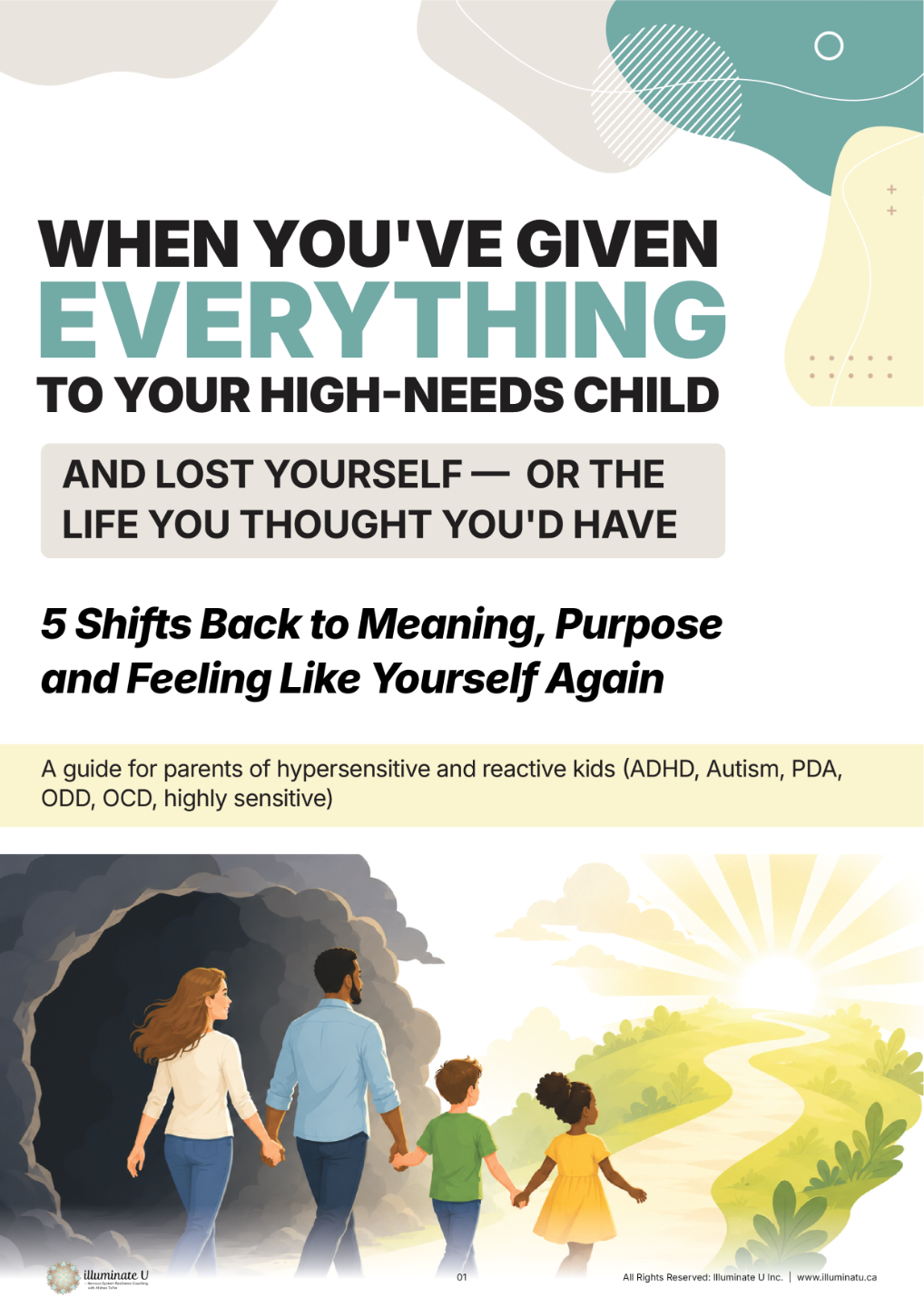
Free: 5 Shifts Back to Meaning Guide
For when you've given everything to your high-needs child and lost yourself — 5 shifts back to meaning, purpose and feeling like you again.
Free: The Regulated Parent Facebook Group
Ask your questions about the podcast and the free guides, and be with other parents who truly get it. Free and private.

