
Why You Can’t Relax—And How to Teach Your Nervous System That It’s Safe
The house was finally quiet, but the moment I sat down my body jolted: you should be doing something. If you can't rest even when your child is calm, your nervous system may be stuck in hypervigilance. I explain why, what staying on costs you, and simple micro-practices to help your body learn it's safe to rest.
You can also listen to this in audio format only on The Regulated Parent Podcast on Apple or Spotify. Look for Episode #8
Below is the podcast turned into a blog article for easy reading.
The Moment Rest Felt Unsafe
The house was finally quiet. No one was making demands of me. No meltdowns. My son was happy and engaged on his iPad, and for the first time all day, there was space for me to finally rest. I was so tired. I sat down, closed my eyes, and immediately felt this jolt in my body: "You should be doing something."
My mind flooded with the mental to-do list—laundry, dishes, emails—and instead of resting, I got up. Again.
Have you ever had a moment like that—where you really want to relax and rest, and you're so tired and stressed, but your mind won’t let you? Where stillness feels almost unsafe, and rest just doesn’t land in your body?
Why is that?
If this sounds familiar—if you can’t rest even when your child is calm—then this article is for you. I’m going to break down why this happens, how it affects your parenting, and how to begin restoring your nervous system’s ability to relax and recover so you can show up as the regulated parent you want to be.
Hypervigilance in the Nervous System
There was a time when my son had so many intense meltdowns and aggressive rages every day that even when things were calm, I couldn’t relax. I spent most of my time co-regulating him, managing the chaos, and using whatever leftover time I had to cook, clean, and keep the house running. If I did get a quiet moment to myself, I’d scroll on my phone or attempt to close my eyes—only to be interrupted by another thought telling me to get something done.
I felt constantly on edge, waiting for the next meltdown. Even when there was no immediate crisis, I couldn’t stop my body from staying on high alert. My nervous system believed it needed to stay ON so I wouldn’t be caught off guard by the next wave of intensity. It also believed that if I let myself relax, I would collapse and not be able to do what was needed.
This is what it means to be stuck in hypervigilance. It’s when your nervous system is constantly hovering in a sympathetic fight-or-flight state. You’re scanning for danger, always on edge, and even when there is no threat—you feel like you have to be ready for one.
If your child activates frequently or doesn’t tolerate you resting, your nervous system can easily adopt this pattern. Over time, the natural rhythm of activation followed by relaxation becomes disrupted.

Signs You Might Be Stuck in Hypervigilance
- You can’t sit still
- You default to staying busy
- Rest feels uncomfortable or unproductive
- You feel fidgety, restless, or your mind races constantly
You are not broken. Your nervous system is doing exactly what it’s designed to do to protect you.
But to be a more regulated parent, it’s important to retrain your nervous system to come back into rest, and restore your ability to cycle between activation and restoration.
Why We Resist Rest
Many of the moms I work with struggle to come down into a relaxed state. Even when we begin a practice together and their body starts to soften, I often see them quickly pop back into sympathetic mode. When we explore this, what often comes up is a belief like:
"If I actually allow myself to rest, I will go into complete collapse. I’ll be so exhausted I won’t be able to do anything." Or, the other answer I often hear is “I feel tired now and I don’t like to feel tired.”
So they override their need for rest, power through the day, and only allow themselves to collapse once everything is done. That pattern makes sense, especially in a culture that glorifies productivity and doing.
We’re conditioned to believe that rest is lazy, that doing more makes us better, and that success means constant movement.
Personal Conditioning Around Rest
I remember feeling lazy anytime I lay around to watch TV. And when I did try to rest as a child, I would hear judgment or criticism in my head, echoing from the past.
My mom often wanted help cleaning, and when I resisted because I truly needed rest, I was told I was being lazy. I internalized the belief that resting meant I wasn’t good or helpful or productive. I also internalized that it was not approved of to listen to my body’s needs. “Override your needs for rest so you can be loved and successful in life” is what I learned.
So now as an adult, my nervous system doesn’t trust rest. It equates stillness with judgment, failure, or collapse.
And if you’re parenting a high-needs child, that old conditioning is only made stronger. Because now you actually DO have to stay on more often. You ARE being asked to respond constantly.
The Hidden Cost of Staying ON
Hypervigilance might feel like you're being responsible or prepared, but it mounts a huge stress load on your system.
Staying in that sympathetic "on" state all day burns a lot of energy. And eventually, your body says: this is unsustainable.
That’s when we drop into dorsal vagal shutdown — a state of collapse, fatigue, helplessness, or even numbness.
In shutdown, you might feel:
- Heavy and disconnected
- Numb or emotionally flat
- Overwhelmed or frozen
- Thoughts like: "I can’t do this," or "This is too much"
This isn’t failure. This is your nervous system’s last-ditch effort to conserve energy.
And the more you avoid rest, the more stress builds in your system.
The more stress you carry, the more easily you’re primed to react to your child. Even small things will feel overwhelming. You might find yourself snapping, yelling, or shutting down—not because you want to, but because your nervous system is maxed out.
Rest helps you empty the bathtub of stress load. When you rest, you release some of that stress and regenerate, so that the next challenge doesn't push you over the edge. It makes space.
Start With Awareness and Micro-Practices
Awareness is always the first step.
Start noticing:
- When you’re about to scroll instead of rest
- When you sit down and immediately feel the urge to jump up
- When your mind races the moment stillness arrives
These moments of awareness are powerful.
They give you space to choose something new—to gently return to the present moment.
Here are a few simple micro-practices that help retrain your nervous system:
- Grounding — Feel your feet on the floor. Notice sensations: warm, cool, firm, soft.
- Support — Feel your back and bum in the chair. Let yourself be held.
- Orienting — Gently move your head and eyes around the room. Let your eyes land on something comforting or neutral—a plant, a blanket, the sky.
Let your system take it in. Notice what shifts.
Even 2–3 minutes of this can start to soften your state. Doing it a few times a day helps release bits of stress load. This is the amazing thing to understand - that those of us busy moms with not a lot (or any) free time to have longer periods of rest - can actually still help our nervous systems to feel little bits of rest, often in the day, and that can help bring in a lot of regulation and build the pathway back to the body learning to go into rest more easily. Little bits, multiple times a day is actually better than one long practice once a day.
When You're Ready for More
If the micro-practices aren’t quite enough, you can build into longer periods of rest.
Try this somatic down-regulation practice:
- Shake it off — Stand or sit and shake your arms, legs, spine. Let your body release stored tension.
- Lie down — On a couch, bed, or supportive surface.
- Feel support — Notice the sensations of your body being held.
- Breathe — Inhale for 4 seconds, exhale for 6 through the nose. Place one hand on your heart and one on your belly.
- Stay — For 15–20 minutes if you can. Let yourself drop into rest.
Use soothing self-talk: It’s safe to rest now.
Tool Spotlight: Unyte’s Rest & Restore Protocol
One of the most powerful tools I now rely on is the Rest and Restore Protocol (RRP) by Unyte.
It’s a neuroscience-based listening program developed by Dr. Stephen Porges and Anthony Gorry. It uses specialized sound frequencies that help regulate your heart rate, breath, and digestive rhythms—guiding your system into deeper parasympathetic states.
I use this multiple times a week. I lie down, put on headphones, and let it support my system into deep stillness.
Even after processing my early trauma where my nervous system learned that if I rest then it is followed by something dangerous (because that is what happened), I still had a residual holding pattern in my body. RRP helped me drop into a deeper layer of rest that I couldn’t reach on my own.
It’s gentle, passive, and powerful—especially when your system feels too stuck to come down by awareness and body based practices alone.
You can explore this tool at http://www.integratedlistening.com/RRP
The Invitation
If you’re stuck in hypervigilance, this is not a nervous system that is failing - it is a nervous system that has learned that this is what you need to do to survive in a highly demanding parenting environment
But with awareness, micro-practices, and tools that support your biology, you can teach your body a new way.
You can rebuild the capacity to rest. To reset. To feel safe in stillness.
And that will make all the difference—not just for you, but for how you show up for your child.
You don’t have to stay on all the time to be a good mom.
Your system will be more ready for the next challenge if it’s allowed to rest and regenerate.
Let this be your invitation to begin.
Questions Parents Ask
Why can't I relax even when my child is calm?
If your child activates frequently or doesn't tolerate you resting, your nervous system can easily get stuck in hypervigilance. That's when your nervous system is constantly hovering in a sympathetic fight-or-flight state. You're scanning for danger, and even when there is no threat, you feel like you have to be ready for one. You are not broken. Your nervous system is doing exactly what it's designed to do to protect you.
What are the signs a parent is stuck in hypervigilance?
Signs you might be stuck in hypervigilance include not being able to sit still, defaulting to staying busy, rest feeling uncomfortable or unproductive, and feeling fidgety, restless, or like your mind races constantly. If your child activates frequently, your nervous system can easily adopt this pattern. Over time, the natural rhythm of activation followed by relaxation becomes disrupted.
Why do I feel lazy or guilty when I rest?
We're conditioned to believe that rest is lazy, that doing more makes us better, and that success means constant movement. Many of us internalized as children that resting meant we weren't good or helpful or productive. So as adults, our nervous systems don't trust rest. They equate stillness with judgment, failure, or collapse. And parenting a high-needs child makes that old conditioning even stronger.
What happens to my nervous system if I never rest?
Staying in that sympathetic "on" state all day burns a lot of energy, and eventually you can drop into dorsal vagal shutdown: collapse, fatigue, helplessness, or even numbness. The more stress you carry, the more easily you're primed to react to your child. Rest helps you empty the bathtub of stress load, so that the next challenge doesn't push you over the edge.
How can a busy parent rest with no free time?
Try micro-practices. Feel your feet on the floor. Feel your back in the chair and let yourself be held. Gently move your head and eyes around the room and let them land on something comforting or neutral. Even 2 to 3 minutes of this can start to soften your state. Little bits, multiple times a day, is actually better than one long practice once a day.
The To-Do List Trap: Why Productivity Keeps Parents of High-Needs Kids Dysregulated
why staying busy keeps you dysregulated
7 Ways to Support Your Nervous System When You're With Your PDA Child All Day
small ways to support yourself all day
Why "Holding It Together" Is Burning You Out as a Parent of a PDA/Autistic Child
the hidden cost of holding it together
Why It Feels So Hard to Stay Calm When Your PDA Child Is Melting Down
the skills regulation depends on
I have four free guides for parents of PDA, autistic and high-needs kids: the 3 Shifts guide for meltdowns, the 4 Shifts Hitting guide for when your child hits, the 7 Truths guide on why you react even when you know better, and the Meaning guide for finding your way back to yourself. Pick whichever one fits where you are right now.
Click Here to Get the Free Guides
And if a question comes up while you’re listening, or while you’re reading one of the guides, come ask it in The Regulated Parent Facebook group. It’s a free, private place to share, ask, and be with parents who truly get it.
And if you want to go deeper with me, the Regulation Rebuild is my course for parents who want to rebuild their own nervous system capacity, step by step. Join the waitlist to hear first when the next round opens.
About the author: Afshan Tafler is a Nervous System Resilience Coach, host of The Regulated Parent podcast, and a parent raising a PDA autistic teen with high anxiety and OCD. She is trained in Internal Family Systems (Level 3), Havening, polyvagal-informed practice and EFT, and is completing her Somatic Experiencing training. She has guided hundreds of parents of ADHD, autistic and PDA kids from burnout and barely coping to steadier, more connected and more alive, within the life they are actually living.
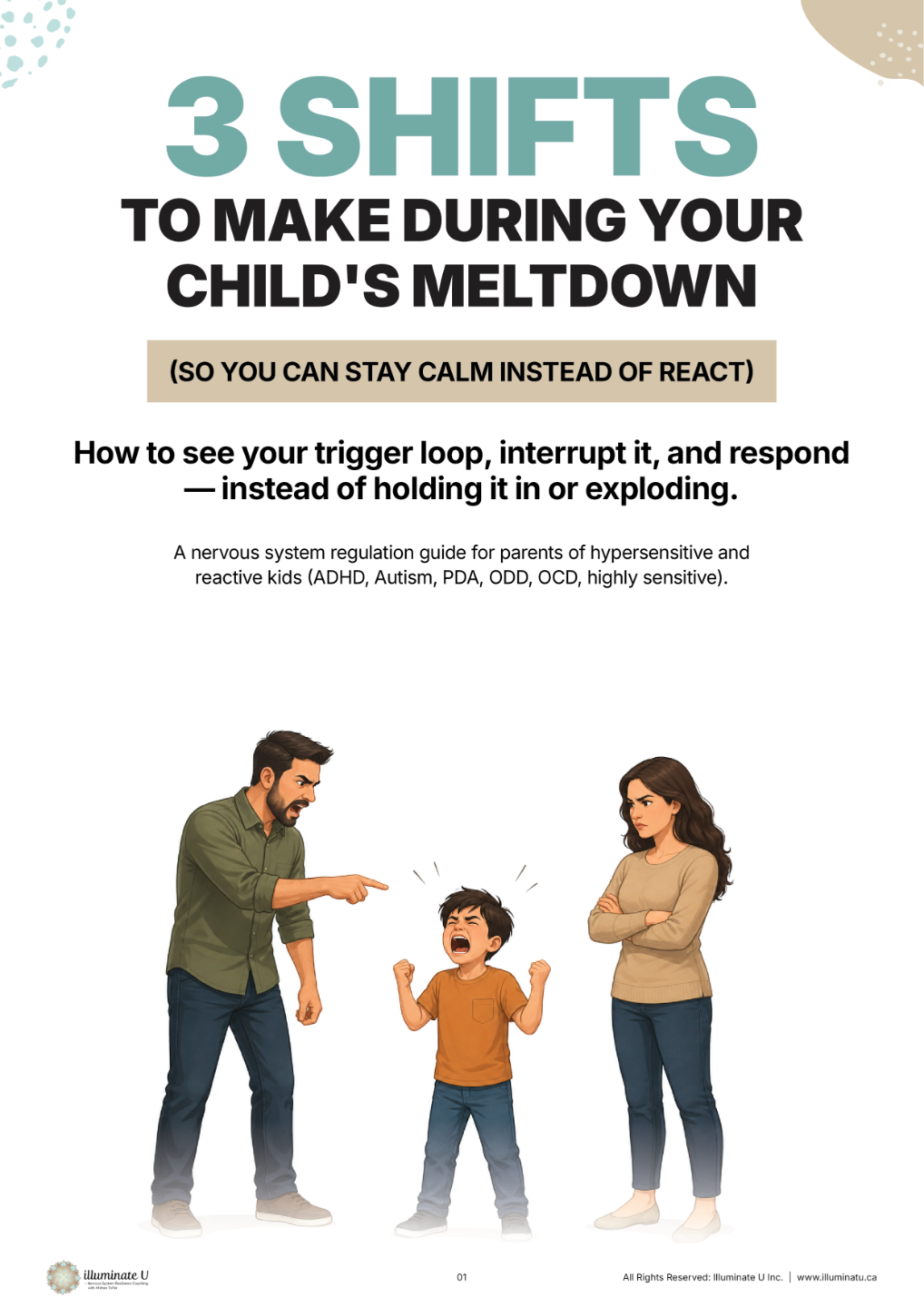
Free: The 3 Shifts Guide
The trigger loop and 3 patterns you get stuck in during meltdowns — and how to shift them so you can stay calm instead of react.
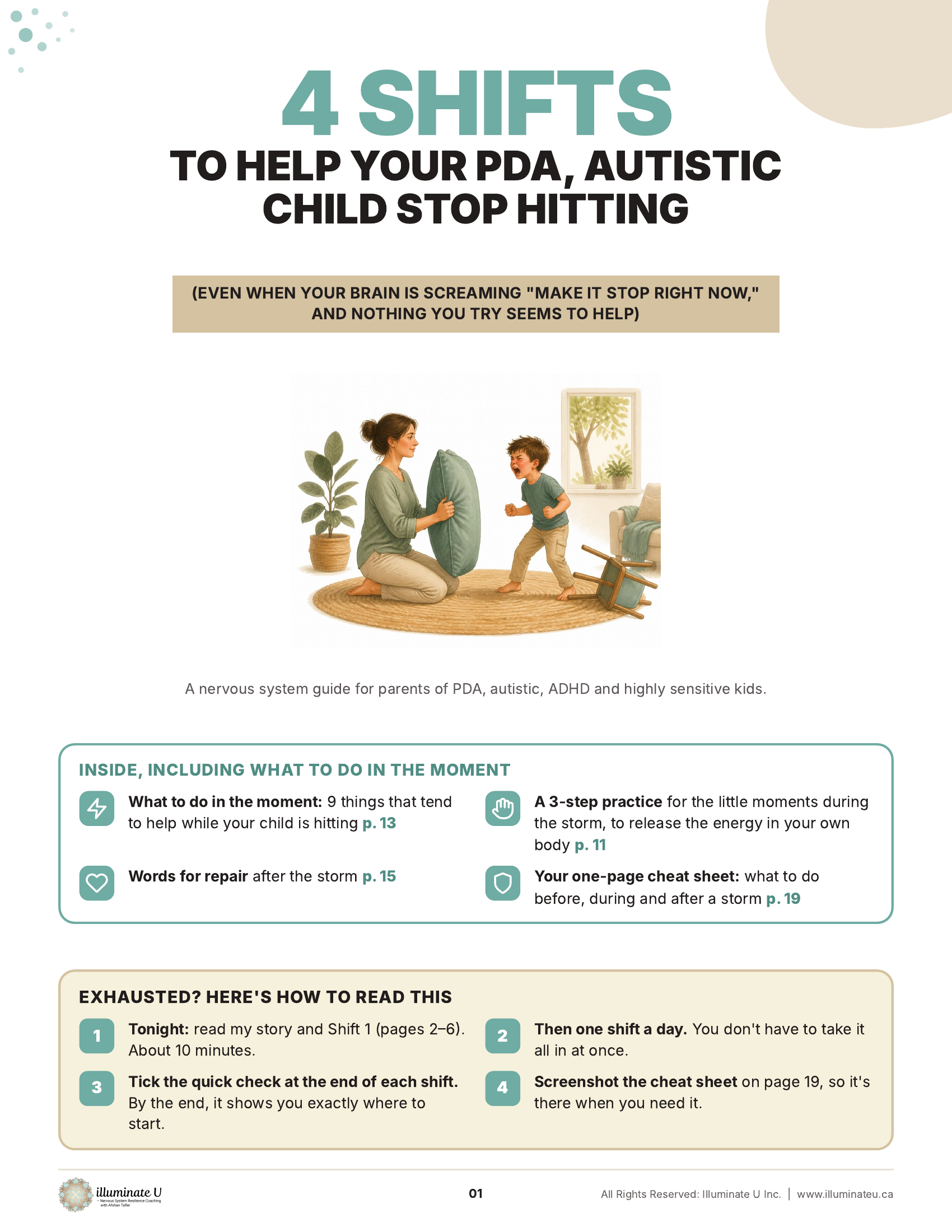
Free: 4 Shifts to Help Your PDA, Autistic Child Stop Hitting
What to do in the moment your child is hitting you, a one-page cheat sheet to keep on your phone, and the 4 shifts that changed things in our home.
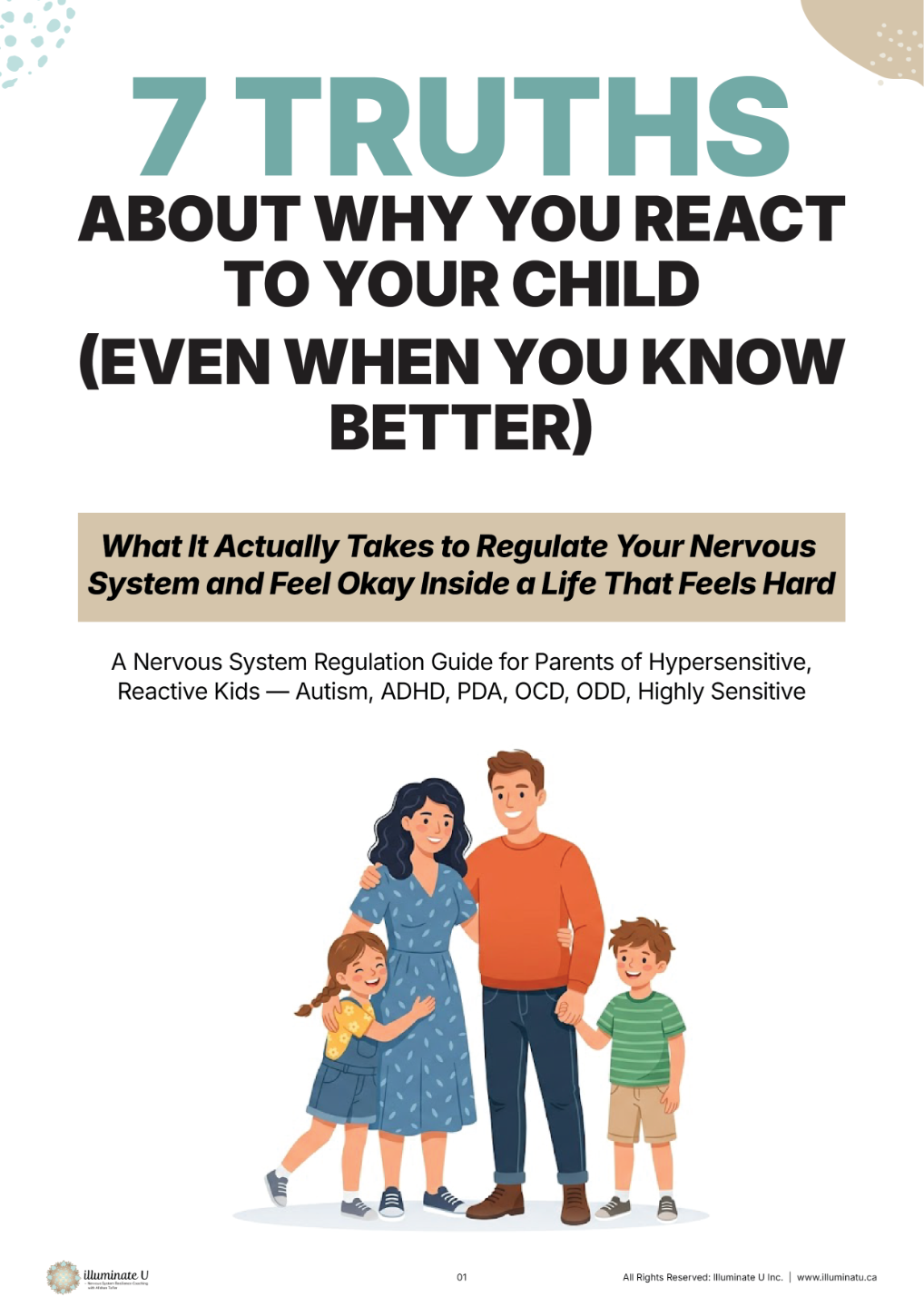
Free: 7 Truths About Why You React to Your Child Guide
Why you react even when you know better — the conditioning, nervous system states, hidden beliefs and patterns, and buried emotions running the show.
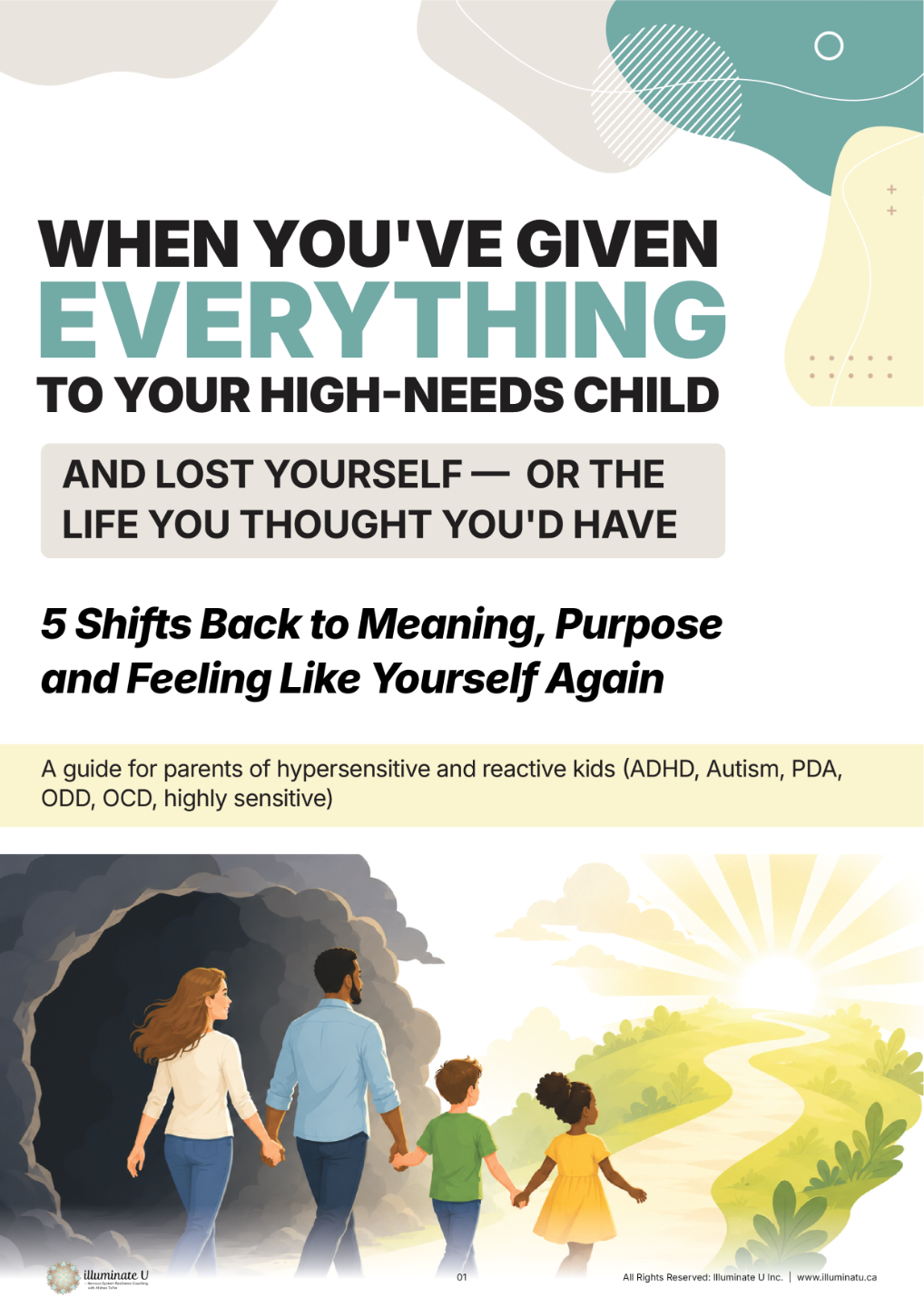
Free: 5 Shifts Back to Meaning Guide
For when you've given everything to your high-needs child and lost yourself — 5 shifts back to meaning, purpose and feeling like you again.

Free: The Regulated Parent Facebook Group
Ask your questions about the podcast and the free guides, and be with other parents who truly get it. Free and private.

